UK garage is a drum genre first. Nail that shuffled 2-step pocket at 132–136 BPM and nearly any bass or vocal idea will sit happily on top. Miss it, and no sound design in the world rescues the track.
Which is why the pocket comes first here. After that we build the three signature sounds in Serum 2: organ bass, warped vocal chop, jazzy stab.
The 2-step pocket
Garage grooves come in two flavors. 4×4 puts the kick on every beat, like house. 2-step pulls the kick off beat 3, and that missing kick IS the feel. The typical skeleton looks like this:
- Kick on beat 1 plus one syncopated spot: the “and” of 2, or just ahead of 3, most often.
- Snare or clap planted on 2 and 4.
- Hats and percs riding shuffled 16ths, with ghost hits tucked between.
Swing is where most people go too timid: push the 16th-note swing to around 55–65% and the groove starts limping in exactly the right way. Here’s the non-obvious bit: swing the hats and percussion hard while the kick and snare stay nearly straight. Apply equal swing to everything and the groove goes from shuffled to drunk.
Organ bass in Serum 2
The classic UKG bassline is an organ-flavored stab: round, punchy, played staccato with octave bounces.
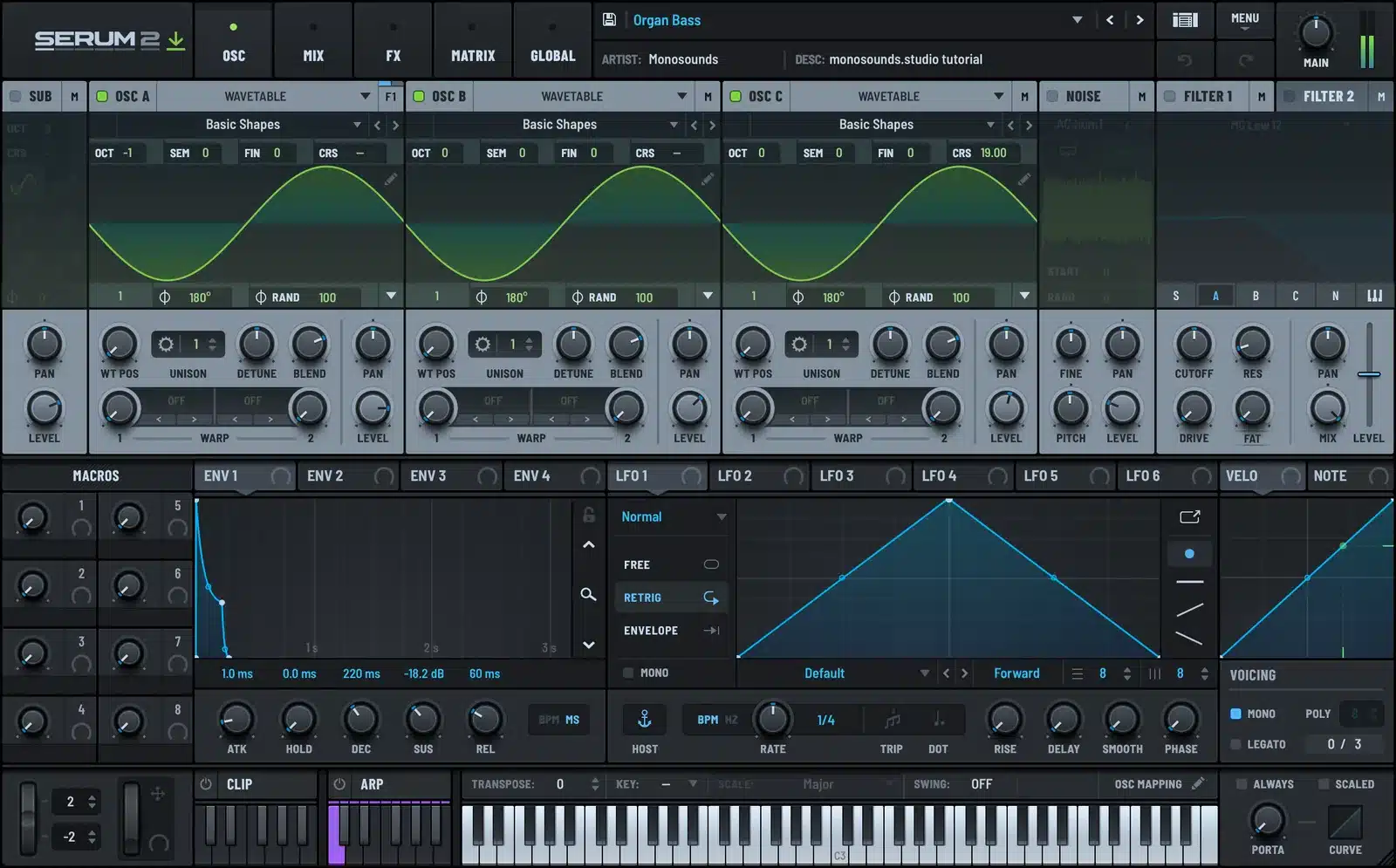
- Osc A: sine on the root.
- Osc B: sine an octave higher (+12), slightly quieter.
- Optional third quiet sine at +19 semitones; that fifth-above-the-octave partial is the difference between “sub” and “organ”.
- Amp envelope: attack instant, decay in the 150–300 ms zone, sustain low. A small filter envelope adds a click of brightness to each hit.
Now the actual secret: the bounce lives in the MIDI, not in the patch. Short staccato notes on the swung grid, hopping between octaves, with gaps left open where the kick needs to speak. Program it straight and even a flawless patch sounds like homework.
Tech house bass patches are near relatives (swung, subby, staccato), which makes this demo a handy reference:
Warped vocal chops
Signature sound number two: vocal fragments pitched and mangled until they behave more like an instrument than a singer. My routine in Serum 2:
- Drop a vocal phrase into the sample or granular oscillator.
- Pitch it upward; +3 to +7 semitones is where the magic sits. Up reads as garage; down reads as trap. As genre switches go, it’s remarkably reliable.
- Trigger short chops from the keyboard, rearranged into new rhythms rather than tracing the original phrase.
- Push the formants or grain settings around until the sound hovers between human and synthetic.
Chops should stay bright and mostly mono; the job is to poke through the shuffle, not wash across it. I covered chop techniques in depth in the vocal chops guide, and every bit of it holds at 133 BPM.
Chords and stabs
Garage got its harmony as an inheritance from US house: sevenths and ninths, played short and sparse. A dull saw into a lowpass with a snappy envelope covers it. One or two stabs a bar, landing on offbeats. Think punctuation, not pad. On the sweeter tunes, filtered Rhodes-style keys occupy the same slot. Both house and RnB packs cover this stab-and-keys territory, and our Serum 2 presets sorted by genre make raiding one for the other painless.
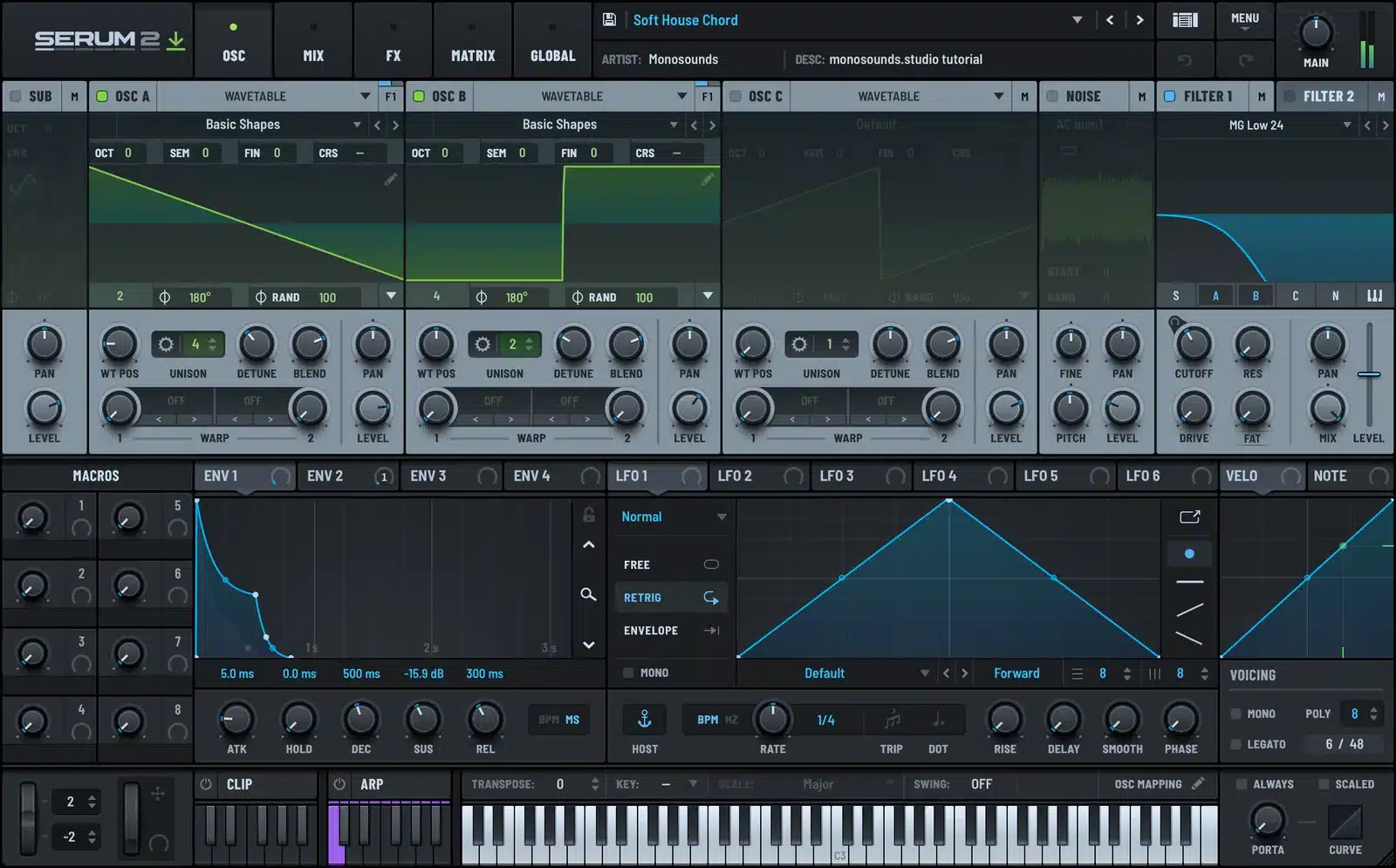
Here’s a synth stack demo living in that swung club register:
Low end: sub under the organ
Beneath the organ stab, run a clean mono sine tracking the roots, gently ducked against the kick. A shuffled kick pattern at 133 leaves less room than house does, so keep the sub dead simple and let the organ’s octave-up partials be the bassline your listeners hear on small speakers.
The free Serum 2 house presets make a solid starter kit for this: swing the MIDI and the bass and stab patches move straight into garage. Chasing the heavier, growlier end instead? That road goes through the bass house guide, since bassline garage lands right between the two genres.
Once club tracks become a weekly habit, the Serum 2 preset bundles beat single packs on pure math: house, bass and vocal material in a single purchase, all of it garage-adjacent.
FAQ
What BPM is UK garage?
The bulk of it lives between 130 and 138. For 2-step my preference is 132–136, quick enough to skip yet slow enough to swing.
Where does the shuffle actually come from?
Hard swing on the 16th-note hats and percs, with quiet ghost hits filling the spaces between. Kick and snare stay close to straight.
Do I need vocal sample packs?
They’re handy, not mandatory. Any vocal phrase you hold the rights to will do; the pitch-up-and-rechop treatment counts for far more than the source material.
4×4 or 2-step for a first track?
Go 4×4 first — the groove is easier to hold onto. Then remove the beat-3 kick and adjust from there. That’s honestly how plenty of 2-step patterns come into existence.
Drums before everything, always. Give the pocket an hour before a single synth gets opened, and the organ bass will more or less write itself over the top.

I run Monosounds.studio and make the packs myself. Ten-plus years of producing, 97+ releases, 16,000+ downloads. Every Serum 2 preset we ship passes a CPU check on a mid-range laptop and gets used in a real track before release. If it does not survive a mix, it does not go in the pack.
More about Maxim & the studio →

