I’ve seen more than a few DJs carry an entire night with nothing but a laptop and a controller. No towers of gear, no rack of CD players. These days the software does the heavy lifting; your part is choosing the right program and putting in the hours to learn it.
My seat is on the producer side of the booth, since making presets and sample packs is how I earn a living. But plenty of my customers DJ, and one question keeps showing up in my inbox: what’s the best DJ mixing software for a laptop, and is paying for it actually necessary? Here’s my honest 2026 answer. Free options first, then the professional tier, then mixing advice that holds true across all of them.
Free DJ software worth starting with
New to DJing? Then hold off on spending. Free DJ software in 2026 is legitimately good, enough for a house party set or a respectable recorded mix. Get beatmatching and phrasing under your fingers on a free program first; only then will the paid features mean anything to you.
VirtualDJ (free for home use)
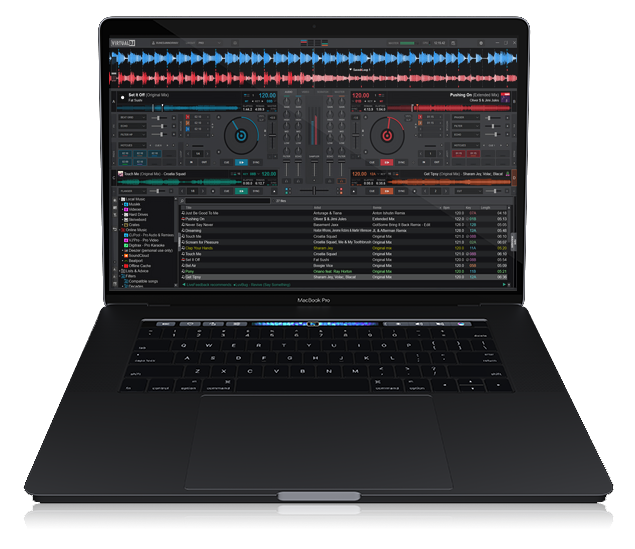
VirtualDJ dates back to 2003, and the current build costs nothing provided you’re not connecting pro club hardware. The deal is better than it sounds, because real-time stem separation comes included in the free version. Pulling the vocal or drums out of any playing track and mashing things together live is right there.
At first glance the interface is cluttered, but the two default decks hold everything a first mix requires. The catch arrives when you want a real controller or a DVS rig, since that demands a paid license. As a home learning tool, though, it’s hard to beat.
Mixxx
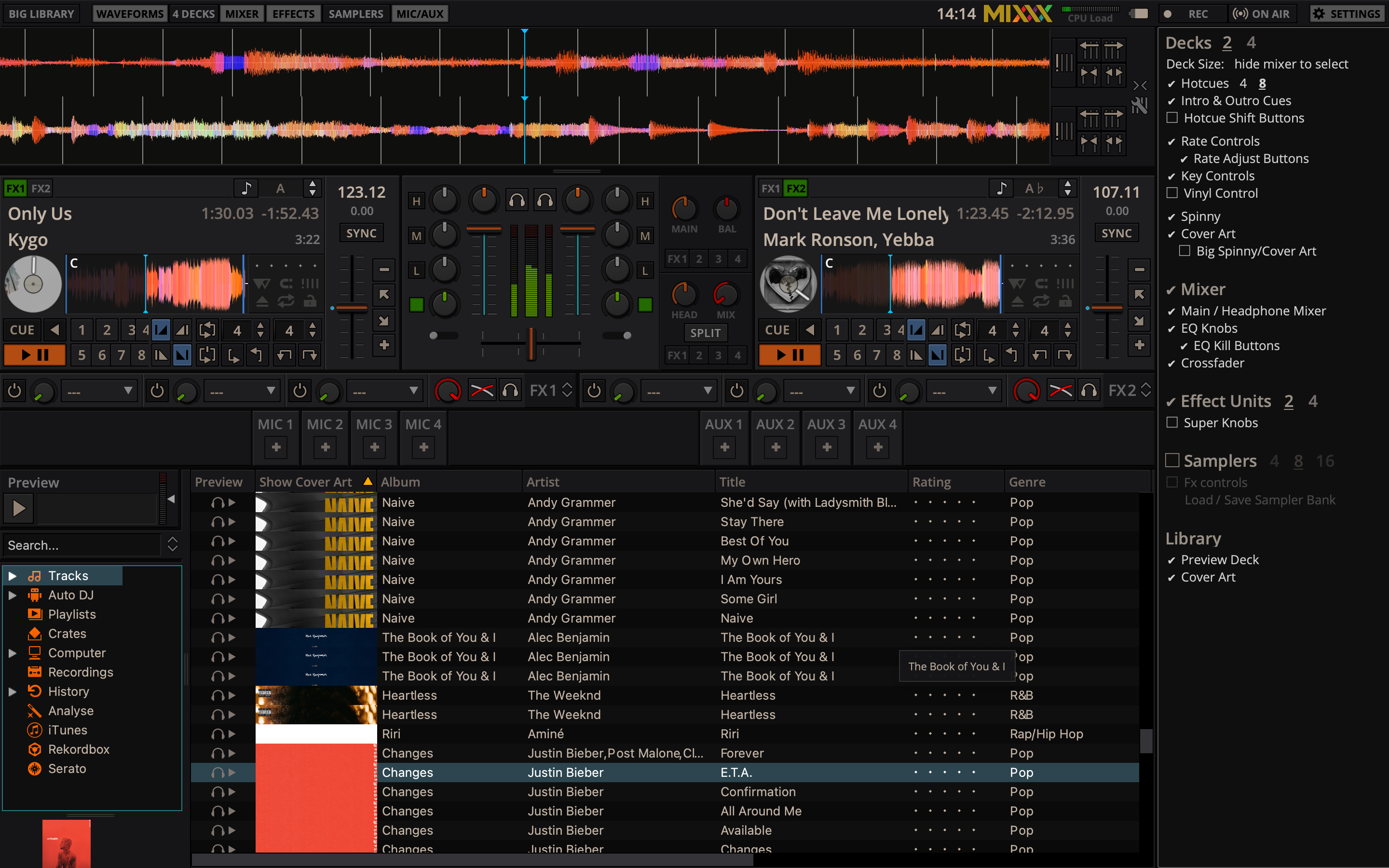
Mixxx is fully free and open source. No locked features, no upsell, nothing. Windows, macOS and Linux are all supported, you get four decks, and recent releases brought stem file support as well.
The controller support is my favorite part: Mixxx ships mappings for an enormous range of MIDI controllers and, unlike most free software, has zero opinion about whose logo sits on your hardware. Hotcues, loops, key detection, vinyl control, all present.
Polish is the weak spot. Community-built software means a rougher workflow than Serato or Rekordbox. Still, among free tools with no restrictions whatsoever, nothing else is in the same league. Get it at mixxx.org.
Serato DJ Lite

Serato DJ Lite is the no-cost edition of the software running in half the world’s club booths. Its practice mode needs no hardware whatsoever, meaning transitions can be learned with a laptop and a pair of headphones, nothing more.
The layout is tidy, sync behaves, and no free option has better library tools. The limits are intentional: Lite’s full feature set only opens up with supported entry-level controllers, while the deeper tools (stems, extra cues, recording in certain setups) sit in Serato DJ Pro. Even so, it stays my default pick for a complete beginner, because every skill learned in Lite carries straight over to the pro version.
Zulu DJ Software
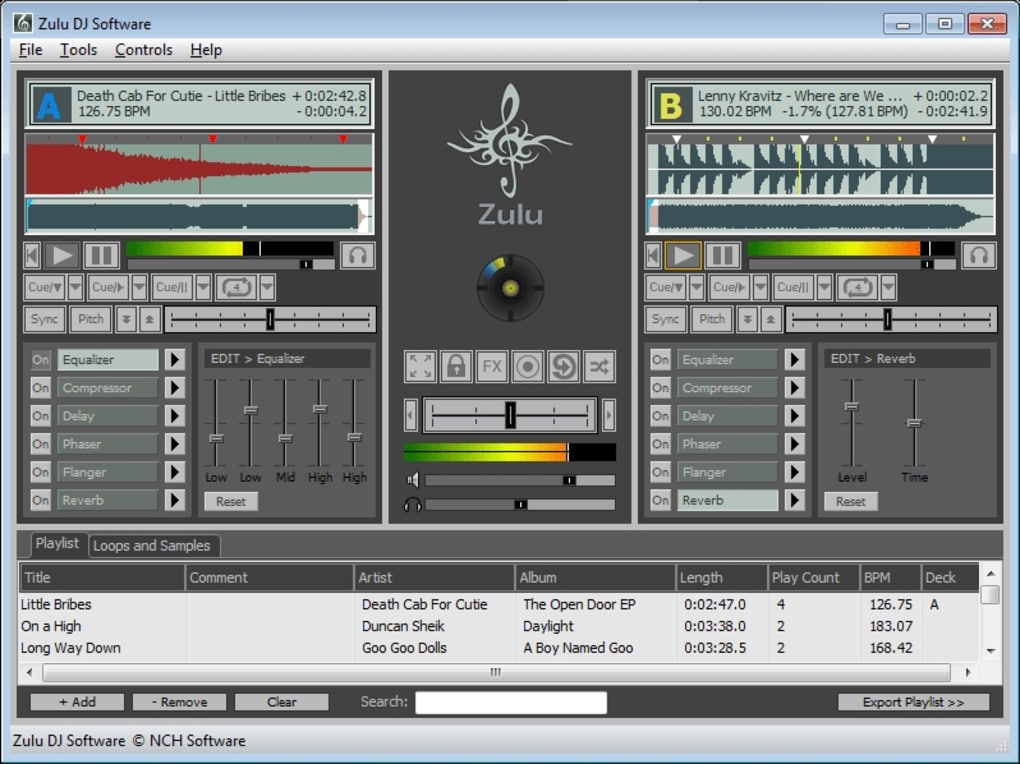
Zulu, made by NCH Software, is the simplest entry on this list. You get two decks, auto-crossfade, a small set of effects, and MP3, WAV and WMA support. It functions, and it’s easy to grasp.
Truthfully, I’d only choose it if everything else feels like too much. Background music at a party? Fine. Building a real DJ habit on it? I wouldn’t, since a month later you’ll have outgrown it and be forced to relearn a proper workflow anyway.
Cross DJ Free
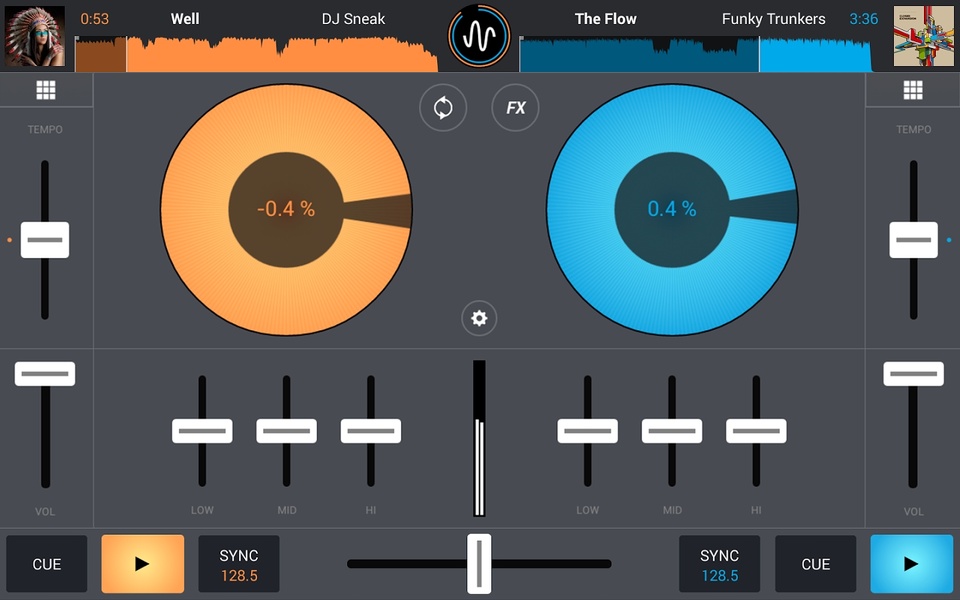
Cross DJ Free from Mixvibes offers two decks, dependable automatic beatmatching, EQs and filters on Windows and macOS, with mobile versions available for tablet practice. For a free tool, the beat analysis is remarkably accurate.
What the free edition strips out is MIDI controller support and the bulk of the effects, which live in the paid version. But as a zero-cost lesson in how two tracks lock together, it delivers.
Paid DJ software for serious sets
The moment you start playing out, the question shifts. It’s no longer "which program is best" but "which program matches the gear installed where I play." The 2026 field looks like this.
Rekordbox 7
Rekordbox is made by AlphaTheta, the company behind Pioneer DJ, whose CDJs and mixers still fill most club booths. That fact alone is the argument: anyone planning to play on standard club gear will be prepping USB sticks in Rekordbox regardless, so mixing in it too is the natural move.
With version 7 came a cleaner interface, cloud library sync across devices, and stem separation. The subscription pricing irritates people, myself included, but a free tier covers library management and basic mixing. If the goal is club gigs, get fluent in it early.
Serato DJ Pro
Serato DJ Pro is where open-format and scratch DJs live. Version 3 introduced Serato Stems, real-time separation of vocals, melody, bass and drums, and it handles the job about as musically as anything out there. Pitch ‘n Time keeps audio natural through big tempo swings, while Flip records your own edits and cue juggles as playable track versions.
Hardware support is massive, stability is rock solid, and once the workflow is in your hands it moves fast. Payment is subscription or a one-time license. Details at serato.com.
Traktor Pro 4
Native Instruments finally delivered Traktor Pro 4 in 2024, closing its biggest gap: stem separation is now native, layered on top of the classic Traktor strengths of four decks, remix decks for triggering samples, and the deepest effects section any DJ software offers. A new pattern player contributes drum loops you can stack over your set.
Traktor remains the tinkerer’s platform. If custom controller mappings excite you and your set feels more like an instrument than a playlist, this is your program. Fair warning: it’s the hungriest for CPU on this list, so a ten-year-old laptop running stems across four decks is asking for trouble.
VirtualDJ Pro Infinity
Paying for VirtualDJ removes everything the free build withholds: complete hardware and DVS support, video mixing, and all advanced features, with a lifetime license available instead of a mandatory subscription. Beneath its consumer-looking skin sits a genuinely capable engine; its stem separation was shipping years before the big names caught up.
Club circles give it less respect than Serato or Rekordbox, and that’s mostly about image rather than ability. For mobile and event DJs in particular, it’s a workhorse.
Ableton Live 12
Ableton Live isn’t DJ software in the classic sense, it’s a full DAW, yet plenty of hybrid acts run entire sets from it, and it’s my own pick whenever a DJ set drifts toward a live set. Session View launches loops, stems and whole tracks in sync, warps any audio onto the grid, and routes everything through real studio effects. Live 12 (2024) sharpened the browser and brought new MIDI tools.
What you trade away is prep time, because a Live set gets built rather than browsed. But for anyone making their own music, performing it from Ableton blurs DJing into live performance, and in the best way.
My advice for cleaner mixes
What you feed the software and how you gain-stage it matters more than the software itself. Rules I wish somebody had handed me sooner:
- Use decent files. Treat 320 kbps MP3 as the minimum; go lossless (WAV, FLAC, AIFF) when storage allows. A 128 kbps rip that passes in earbuds collapses on a club system, with cymbals dissolving into static.
- Stay out of the red. Aim each channel’s peaks near -6 dB on the meter and never touch the master. Making it loud is the sound system’s job, not yours, and a clipped master is the quickest amateur giveaway.
- Cut EQ, don’t boost. Bringing a track in? Roll the lows off the incoming channel, then trade basslines in a single move at the phrase change. Two full basslines at once equals mud, without exception.
- Mind the key. Key detection is built into every program here now. In-key mixing (or one step around the Camelot wheel) makes ordinary transitions sound deliberate. Hold pitch shifts to about two semitones or engage keylock.
- Record everything. Each practice session, at 44.1 kHz. Next-day listening teaches more than any tutorial ever will, because every rushed transition is right there in the recording.
Make your own edits: where Serum 2 fits in
The real edge in 2026 is this: identical tracks and an identical sync button are available to every DJ alive. The ones who get noticed play material nobody else owns, meaning their own edits, intros and drops. Yes, that’s production territory, and no, it isn’t as scary as it sounds.
Xfer Serum 2 is my main tool for the job. Serum 1 owners got the update free back in March 2025, and it’s a different animal now: three oscillators, five engine types including granular and spectral, proper effects buses, a built-in sequencer. Starting from zero? My Serum 2 beginner guide handles the basics, and for alternatives I surveyed the field in best wavetable synths in 2026.
For club-oriented edits, presets are the fast lane. Building tech house tools, whether intro loops, bass stabs or one-bar fills, I reach for my Tech House Serum 2 presets (Fishlake Vol.2) and the Techsonic bank, whose basses come pre-tuned for that rolling, subby lane. Here’s a raw Techsonic preview:
For darker rooms, the Technocraft techno presets deliver rumbling basses and stab sounds that drop directly into a DJ tool, while house sets are served by the Melomagic house preset bank. One more demo, from the techno side this time:
Not ready to spend? I give away a free pack of 271 Serum 2 presets, which is plenty to build a first edit from. And once designing the bass yourself sounds appealing, my tech house bass tutorial takes it patch by patch.
FAQ: DJ mixing software on a laptop
What is the best free DJ software in 2026?
Mixxx for zero restrictions plus controller support; Serato DJ Lite for the smoothest road into pro software later; VirtualDJ’s free edition for stem separation without paying. Any of the three is good enough to learn on and to record real mixes with.
Can I DJ with just a laptop and no controller?
Yes. Keyboard and mouse work in every program listed here, and sync covers the beatmatching while your attention goes to track selection and EQ. The one early purchase worth making is a cheap audio interface or a split cable, so headphone pre-listening can happen while the room hears the main output.
Should I learn Rekordbox or Serato?
Decide based on where you want to play. CDJ club residencies point at Rekordbox, because USB prep happens there no matter what. Open-format, scratch and controller work leans Serato. The fundamentals of phrasing, EQ and reading a room transfer between them completely.
What laptop do I need for DJ software?
Basic two-deck mixing runs on any recent machine: a mid-range CPU from the past five years, 8 GB of RAM, an SSD. Real-time stems are the exception since they devour CPU, so stem-heavy sets in Traktor Pro 4 or Serato deserve 16 GB and a current processor. And always play on mains power with sleep disabled.
That’s the toolbox. Grab one free program tonight, mix two tracks until the transition bores you stiff, then climb from there. Should you end up making your own edits, the free Serum 2 presets are the cheapest way to discover how much of that "DJ sound" you can build with your own hands.
I run Monosounds.studio and make the packs myself. Ten-plus years of producing, 97+ releases, 16,000+ downloads. Every Serum 2 preset we ship passes a CPU check on a mid-range laptop and gets used in a real track before release. If it does not survive a mix, it does not go in the pack.
More about Maxim & the studio →

