This list went up in June 2023 and somehow became one of the busiest pages on the whole site. Deleting it felt wrong, so I gave it a refresh instead. The synths are the same ten, but each entry now carries an honest note on how it aged over three years. Short version: plenty changed.
Only interested in what I’d recommend today? Skip straight to the best wavetable synths of 2026. What you’re reading here is the 2023 ranking with hindsight bolted on.
One piece of housekeeping. For a while, the top spot on this page was occupied by a spam entry, some “AI synthesizer” that never existed as an actual product. Somebody injected it into the page and it slipped past me. It’s been removed. My apologies for that.
What changed since 2023
- Serum became Serum 2 in March 2025, free of charge for every Serum 1 owner. It brought three oscillators instead of two, five synthesis engines (granular and spectral among them), new FX buses, and an onboard sequencer. My full Serum 1 vs Serum 2 comparison has the details.
- UVI Falcon 3 arrived a few months after this list was published, so the Falcon writeup below now covers version 3.
- Vital was missing from the original ranking. That was an error, and I’ve fixed it with an entry at the end.
The 2023 top ten, revisited
1. Serum by Xfer Records (now Serum 2)
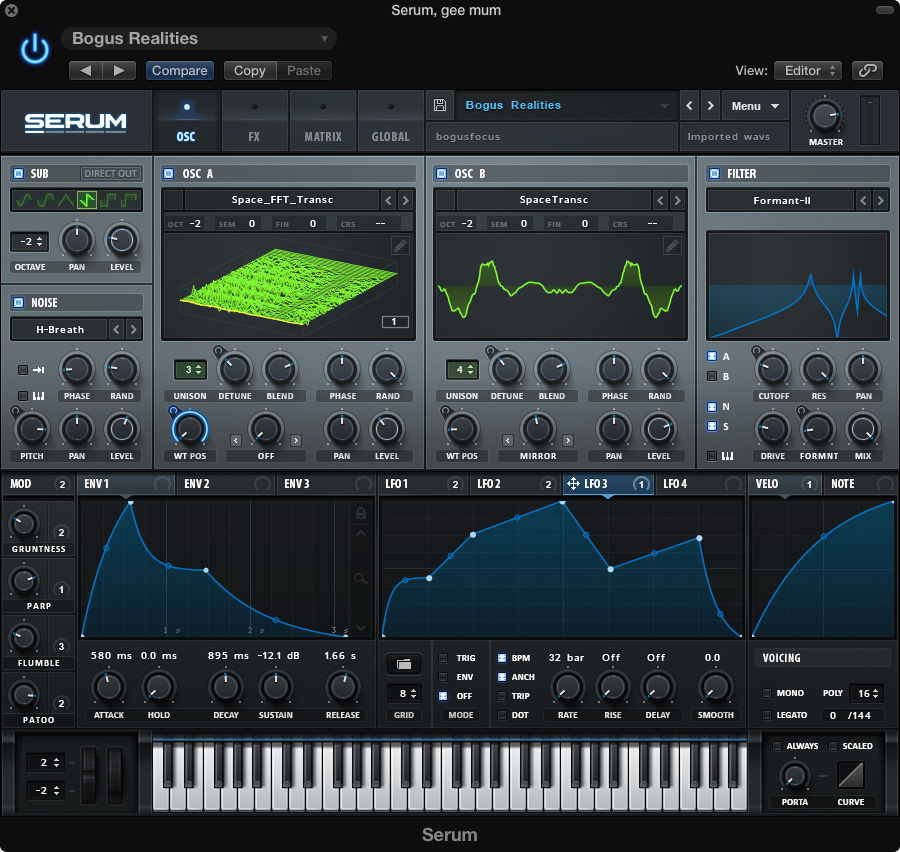
Back in 2023 I ranked Serum third. Today it’s an easy first place, because Serum 2 answered nearly every complaint anyone ever had about the original: 3 oscillators, granular and spectral engines sitting alongside wavetable, a multisample engine, routable FX buses, and a clip sequencer living inside the synth. The price of that upgrade for existing owners? Zero.
Most of my packs are still built on it. Curious how it sounds in context? Here’s a preset demo pulled from one of mine:
Building a library from scratch? Our Serum 2 preset bundles handle most genres in a single purchase, and the free pack with 271 Serum 2 presets lets you audition the synth before spending a cent on sounds.
Serum 2 on the Xfer Records site
2. Arturia Pigments

The original list featured Pigments 3, and Arturia has been shipping updates without pause since then. The screenshot above is dated; the synth isn’t. Wavetable, granular, sample and virtual analog engines all live under one roof, and no synth on this page makes modulation easier to read at a glance. You drag a color onto a knob and you’re done.
The cost of all that: it chews more CPU than Serum 2 does on comparable patches. For me it earns its slot on evolving textures and pads, where the granular engine really pays off.
3. U-he Diva
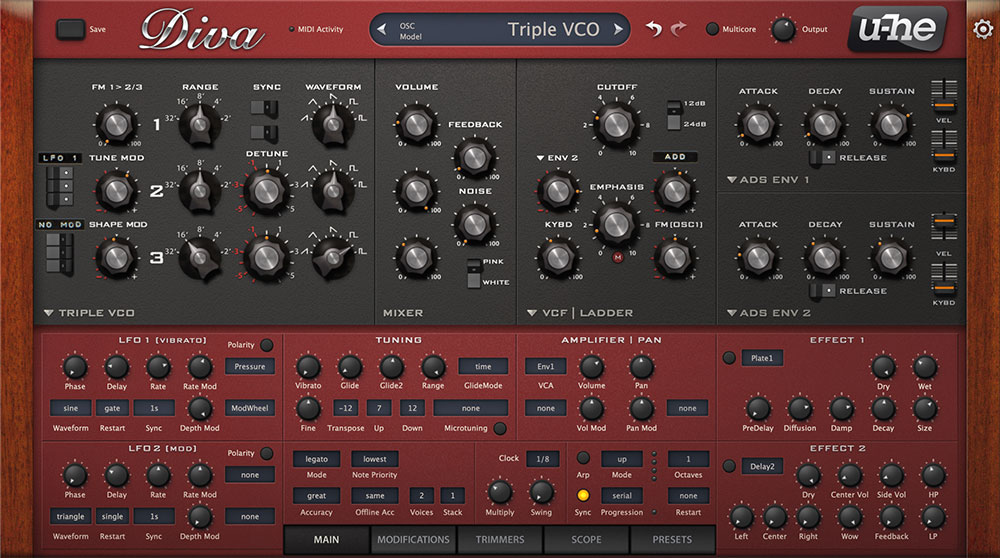
The best analog emulation money can buy in software, and that hasn’t budged. Diva models vintage oscillator and filter circuits, and those filters are the reason people open their wallets. No other entry here self-oscillates this beautifully.
A practical habit that was true in 2023 and still is: sketch your parts in “Fast” or “Great” accuracy mode and only flip to “Divine” for the bounce. Divine will cheerfully devour an entire modern CPU core per voice. And flip the multicore switch on in the settings.
4. Phase Plant by Kilohearts
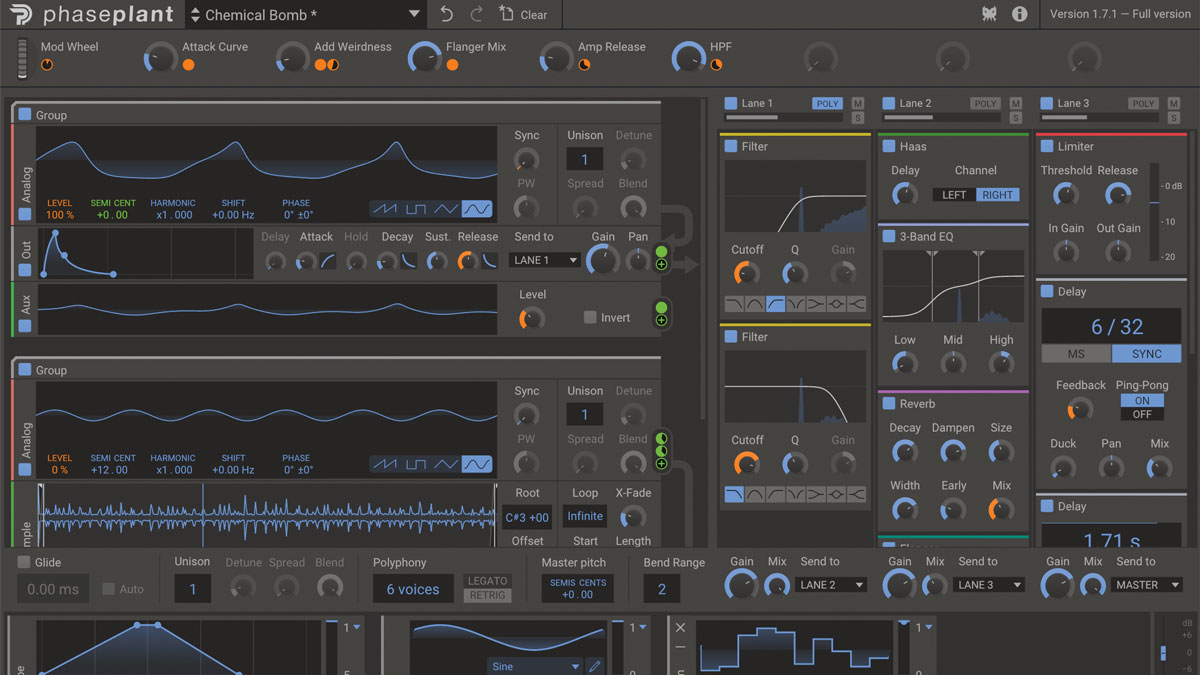
Think of Phase Plant as modular synthesis with the patch cables removed. Generators stack vertically, and Kilohearts snap-in effects chain across three parallel lanes. The bass music sound design crowd moved in years ago and never left.
What to watch out for is the ecosystem pricing: the synth itself is one number, but collecting the full set of snap-ins costs serious money on top. If this is your pick, plan for the bundle.
Phase Plant on the Kilohearts site
5. Native Instruments Massive X
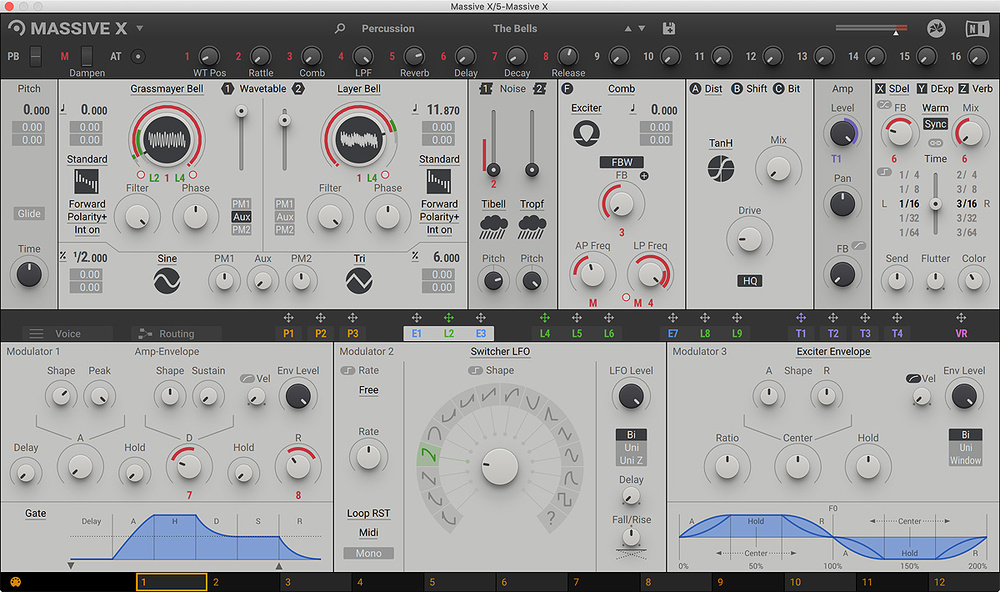
Time for some honesty. Massive X remains deep and great-sounding, but updates arrive slowly and its preset ecosystem never grew to anything like Serum’s. The Performer modulators are legitimately excellent for rhythmic patches. Even so, I open it less with every passing year.
Own Komplete already? Then use it, it’s right there. As a standalone purchase in 2026, I’d pass.
6. Spectrasonics Omnisphere
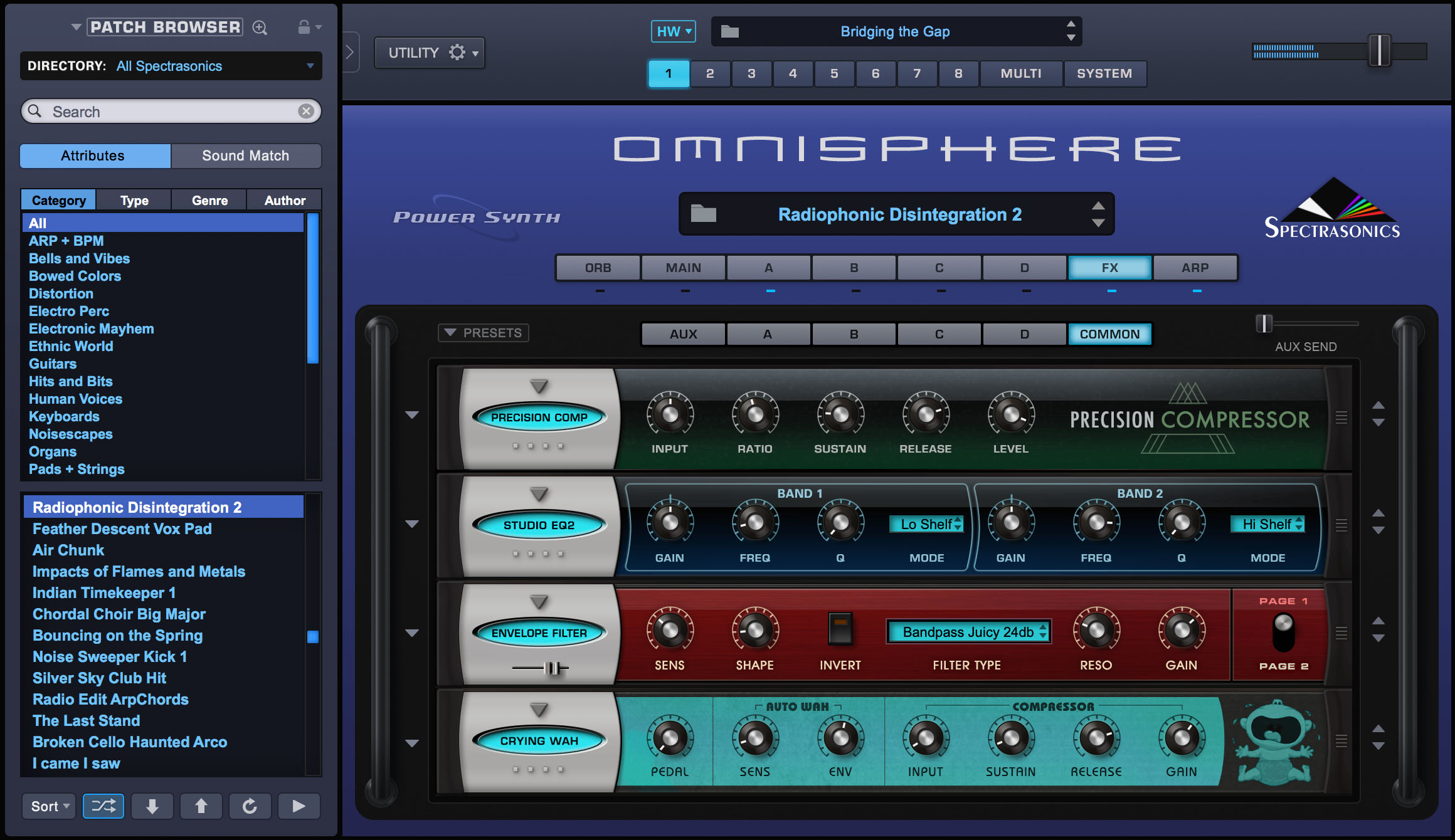
Calling Omnisphere a synth undersells what it is: a 60+ GB sound library with a synthesis engine attached. Nothing else touches it for film scoring, ambient work and pads. If you happen to own one of the supported hardware synths, the plugin mirroring your hardware panel is a genuinely nice touch.
As a first synth, though, it’s the wrong call. You’d spend your sessions browsing instead of designing.
Omnisphere on the Spectrasonics site
7. UVI Falcon 3
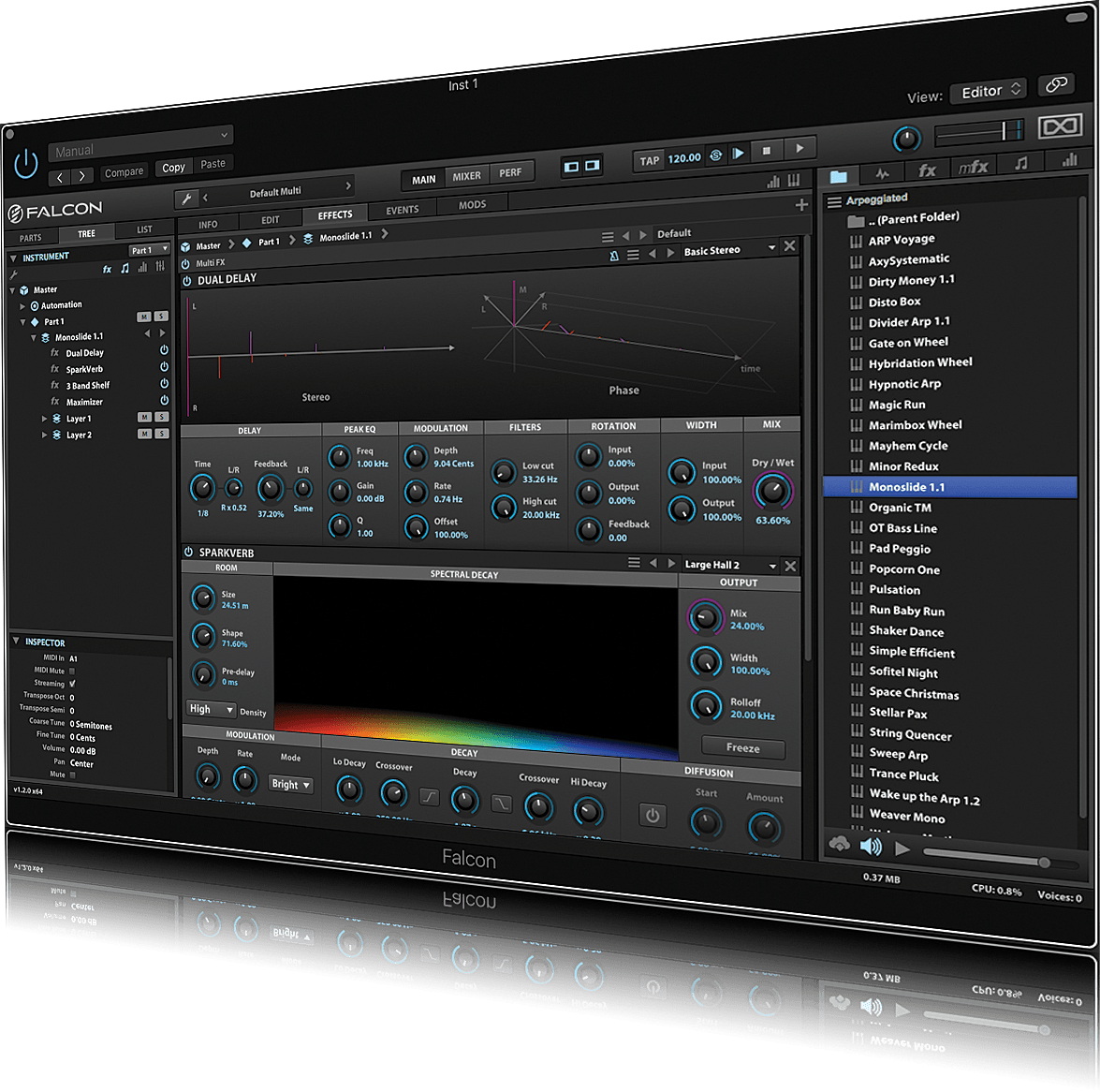
Falcon 3 shipped in late 2023 carrying over 20 oscillator types: wavetable, granular, FM, physical modeling, all of it. No single instrument on this page can do more, and no single instrument here takes longer to learn. Approach it as a modular studio rather than a preset player and you’ll get along.
8. Cherry Audio Voltage Modular

A virtual Eurorack living inside your DAW. Niche, sure, but for the modular-curious it costs a few hundred dollars less than a single real filter module would. Cherry Audio discounts everything constantly and aggressively, so paying list price is a rookie mistake.
Voltage Modular on the Cherry Audio site
9. Sylenth1
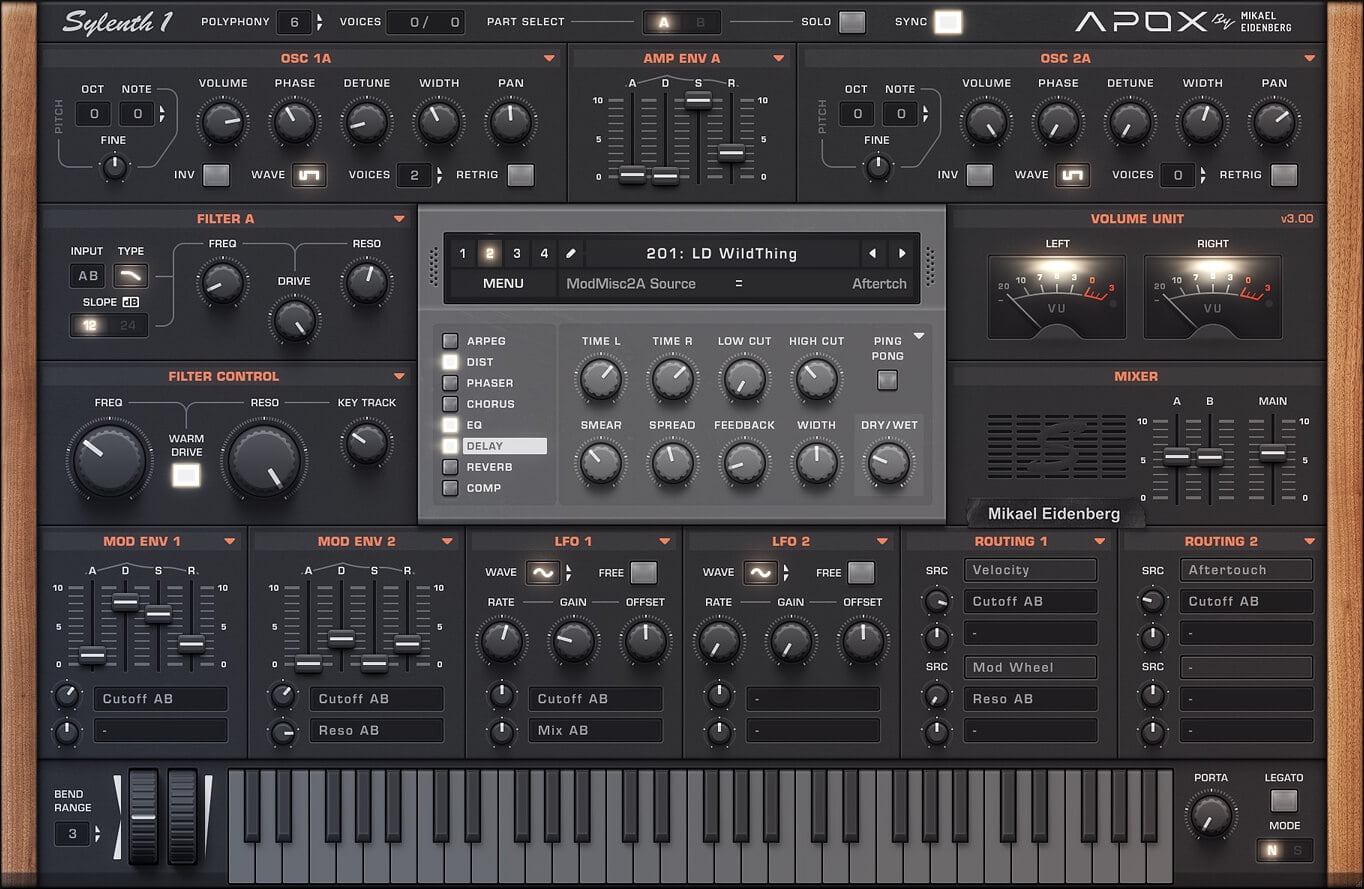
The description in the original post came out garbled, so here’s the corrected one: Sylenth1 is LennarDigital’s veteran virtual analog, beloved for its warm unison saws and CPU use that barely registers. A huge share of the EDM anthems of the 2010s were built on it.
By 2026 standards it feels a little dated for modern bass music. For trance plucks, supersaws and clean leads, though, it still delivers, even running on a decade-old laptop.
Sylenth1 on the LennarDigital site
10. Vital (the one I missed in 2023)
Vital belonged on the original list and I left it off. It’s Matt Tytel’s spectral warping wavetable synth, its free tier is genuinely complete rather than crippled, and anyone who has spent time in Serum will feel at home in the workflow immediately. The text-to-wavetable feature justifies the download on its own.
Where it stands against Xfer’s flagship in 2026 deserves its own article, and I gave it one: Serum 2 vs Vital. The condensed verdict: Vital takes the price argument, Serum 2 takes engines and ecosystem.
We design sounds for it as well — the RnB Sound Collection for Vital makes a solid entry point for anyone producing melodic music.
Which one should you actually buy in 2026?
Three more years of daily use later, here’s where I land:
- You produce electronic music of any kind: Serum 2. Largest preset ecosystem, best tutorial coverage, and the 2025 update modernized it at no cost.
- Your budget is zero: Vital. Nothing else comes close.
- You want analog warmth: Diva, CPU bill and all.
- You score films or make ambient: Omnisphere.
- You love sound design more than finishing tracks: Phase Plant or Falcon. You already know which type you are.
If I could send one message back to 2023 me, it would be this: the synth matters far less than the sounds going into it. One stock synth loaded with good presets beats owning five synths stuck on factory banks. Monosounds exists for exactly that reason.
FAQ: best synth VST questions
Is Serum 2 really a free upgrade from Serum 1?
It is. When Xfer shipped Serum 2 in March 2025, every Serum 1 owner got it free, including people who finished a Splice rent-to-own plan years earlier. Serum 1 presets open in Serum 2 with no conversion step.
Is Vital as good as Serum 2?
On core wavetable duties they’re close, closer than the price difference implies. Serum 2 pulls away once you count the granular, spectral and multisample engines, the FX bus routing, and a third-party preset market many times larger. Choosing a first synth on a tight budget? Take Vital now, upgrade later.
Are these 2023 synths still worth buying in 2026?
Mostly yes. Software synths age gently because developers keep shipping free updates; people who bought Serum 1 in 2014 received Serum 2 for nothing eleven years on. The two I’d avoid now are Massive X (unless Komplete is already on your drive) and any synth you only want because a YouTuber said so.
What’s the best synth VST for beginners?
Free route: Vital. Paid route: Serum 2 at around $189. Both come with enormous learning communities, and since their layouts are so alike, skills carry over between them. Commit to one for six months rather than hoarding plugins.
Going the Serum 2 route? Then before buying any sounds, download the free 271 Serum 2 presets pack. It’s the quickest way to hear what the synth is capable of, and the price is an email address rather than money.
I run Monosounds.studio and make the packs myself. Ten-plus years of producing, 97+ releases, 16,000+ downloads. Every Serum 2 preset we ship passes a CPU check on a mid-range laptop and gets used in a real track before release. If it does not survive a mix, it does not go in the pack.
More about Maxim & the studio →

