The first version of this post is from December 2022, when Serum 1 was still the synth every forum thread argued over. Things look different now. Xfer shipped Serum 2 in March 2025 as a free upgrade for every Serum 1 owner, and instead of slowly fading, the synth got a second life. I’ve reworked this article for 2026 to explain why it’s still the first plugin I reach for, and where serum presets worth loading actually come from.
Completely new to the synth? Then after this, read my Serum 2 beginner guide; it goes through the interface piece by piece.
Where Serum Came From
Steve Duda wrote Serum and put it out in 2014 through his company Xfer Records. Duda had spent the early 2000s on electronic projects with Deadmau5, and Serum shows it — it’s a synth built by a producer, with clean sound as the priority and pretty knobs a distant second.
The original pitch was straightforward: wavetable synthesis with barely any aliasing, an interface that shows you what every modulation is doing, and a wavetable editor where you draw or import your own tables. Put those together and you get the synth that became the default for dubstep, future bass, EDM and, eventually, a good half of modern pop.
Skrillex, Marshmello, Zomboy and Getter built whole sound palettes on it. The stat that says more, though, is how many working producers nobody’s heard of keep buying it anyway. It’s the synth every tutorial quietly assumes you own.
Serum 2: What Actually Changed
March 2025, Serum 2 arrives, free for anyone holding a Serum 1 license. That one decision earned Xfer an enormous amount of goodwill. The short list of what’s new:
- Three oscillators where there used to be two, so a supersaw, a sub and a texture layer can now live in one instance.
- Five synthesis engines per oscillator: wavetable, multisample, sample, granular and spectral. Serum 1 did wavetable and nothing else.
- New FX buses, letting you send oscillators to separate effect chains rather than one shared rack.
- A built-in sequencer and arpeggiator, jobs that previously fell to your DAW or a third-party MIDI tool.
- A larger modulation system, a redone browser and friendlier CPU behavior on current machines.
For sound designers, the granular and spectral engines are the big story. Any sample can be dragged in and smeared into pads and textures that were flatly impossible in Serum 1. I broke down the full comparison separately in Serum 1 vs Serum 2.
Worth knowing on the practical side: Serum 1 presets open fine in Serum 2, and your old preset folder comes along. Nothing you made or paid for goes obsolete.
Why Producers Still Pick It in 2026
The competition is real these days. Vital costs nothing and does a lot, Phase Plant goes deeper if you like modular-style routing, and Pigments is prettier in a dark studio. Serum keeps winning on three counts:
Sound quality under pressure. Drive a Serum oscillator into aggressive FM or rapid wavetable movement and the output stays clean. This is exactly why bass music producers never jumped ship. Cheap wavetable implementations alias and turn gritty up top; Serum simply doesn’t.
Preset ecosystem. Ten-plus years as the industry default means more presets, wavetables and tutorials exist for Serum than for all its rivals put together. Name a genre and somebody already made a soundbank for it.
You can see everything. Move a knob and the waveform reacts in front of you. As a way to learn synthesis, that feedback loop beats any manual, which is also why it keeps showing up in courses.
The factory library comes with hundreds of presets, and for your first month that’s plenty. The problem is that stock sounds are everyone else’s stock sounds too — which is where the next section comes in.
Serum Presets: How to Buy Without Regret
Some rules I stick to myself, wearing both hats: buyer, and someone who sells preset packs for a living:
- Always listen to the demos first. A seller who won’t play you raw, dry previews is telling you the presets need three plugins of polish before they sound like the ad.
- Check the format. Packs marked for Serum 2 may lean on the new engines, so they won’t open in Serum 1. Serum 1 packs run in both.
- Buy for a project, not for a mood. A tight 50-preset genre pack you actually load beats a 5,000-sound bundle you scroll through exactly once.
- Learn from what you buy. Crack open the macros and mod matrix on your favorite preset and trace the wiring. There’s a synthesis lesson baked into the price.
Never installed third-party presets before? My Serum 2 preset install guide handles Windows and Mac in roughly two minutes.
Packs From Our Catalog Worth a Look
Here are the packs from my own catalog that belong in this post. Every one has been updated for Serum 2.
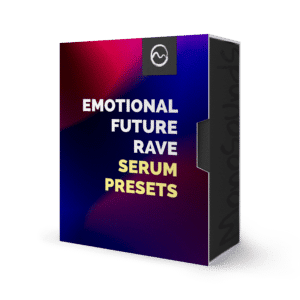
Tight, aggressive festival basses and leads in the David Guetta and Morten lane. Making big-room house, or anything with a pumping off-beat bass? This is the one to open first.
Unlimited Sample Pack & Serum 2 Presets
One download, presets and samples together: electric and acoustic guitars, drums, 808s. A solid choice for hip-hop or pop producers who want raw material rather than synth patches alone.
An entire synth brass section, tight stabs through wide chord stacks. Niche territory, admittedly, but no other pack in the catalog touches it.
EDM Presets For Xfer Serum 2 (Arcadia)
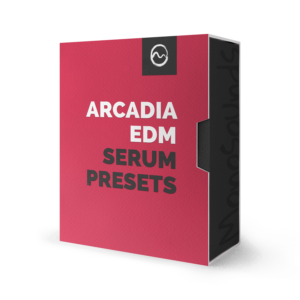
A wide-ranging EDM starter kit: leads, plucks, basses, pads. If one pack has to cover most festival genres, make it this one.
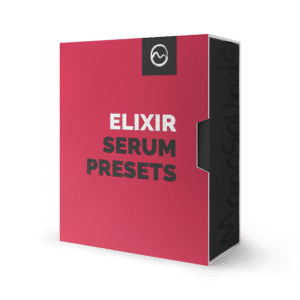
The budget all-rounder: basses, 808s, atmospheres and keys aimed at melodic electronic music.
Sitting at zero budget right now? Take the Serum 2 Free Presets pack: 271 sounds, no strings attached. There’s no easier way to find out whether my sound design style suits your music.
FAQ: Xfer Serum in 2026
Is Serum 2 free if I own Serum 1?
Yes. Serum 2 shipped in March 2025 as a free update for all Serum 1 owners. Sign in to your Xfer Records account, grab the new installer, and your existing license covers it.
Is Serum still worth buying in 2026?
In my opinion, yes. Three oscillators, five synthesis engines, a built-in sequencer, and the biggest third-party preset ecosystem any synth has ever had. If the upfront price stings, Xfer also does rent-to-own through Splice.
Do Serum 1 presets work in Serum 2?
They do: they load and sound identical. Going backwards is where it breaks: anything built with Serum 2’s granular or spectral engines won’t open in Serum 1.
Serum or Vital: which should a beginner pick?
Vital costs nothing and is genuinely good, so starting there is perfectly reasonable. But if Serum fits your budget, the sheer volume of tutorials and presets around it speeds up learning considerably. My read on the current field lives in best wavetable synths of 2026.
Final Word
Serum got where it is the unglamorous way: it sounds clean, it shows you exactly what it’s doing, and Xfer spent over a decade improving it without ever billing owners twice. Serum 2 only stretched that lead further.
Curious what it can do before parting with any money? Download the free Serum 2 presets and throw a few into your next session. You’ll learn more from that than from any article, this one included.
I run Monosounds.studio and make the packs myself. Ten-plus years of producing, 97+ releases, 16,000+ downloads. Every Serum 2 preset we ship passes a CPU check on a mid-range laptop and gets used in a real track before release. If it does not survive a mix, it does not go in the pack.
More about Maxim & the studio →Looking for the packs themselves? Here is the Serum 2 preset catalogue — sorted by genre and by sound, with a demo on every one.


