Contrast is the whole trick in melodic dubstep. Verses stay tiny and fragile: a piano, a vocal, a little air. Then the drop arrives like a wall. Every patch you build in Serum 2 for this style exists for that single second when quiet flips into loud.
You need three things done well: the supersaw chords, basses that growl without going full dubstep, and an arrangement that makes the drop feel deserved. Let’s build all three.
The supersaw chord patch
Every melodic dubstep drop leans on this wall of sound.
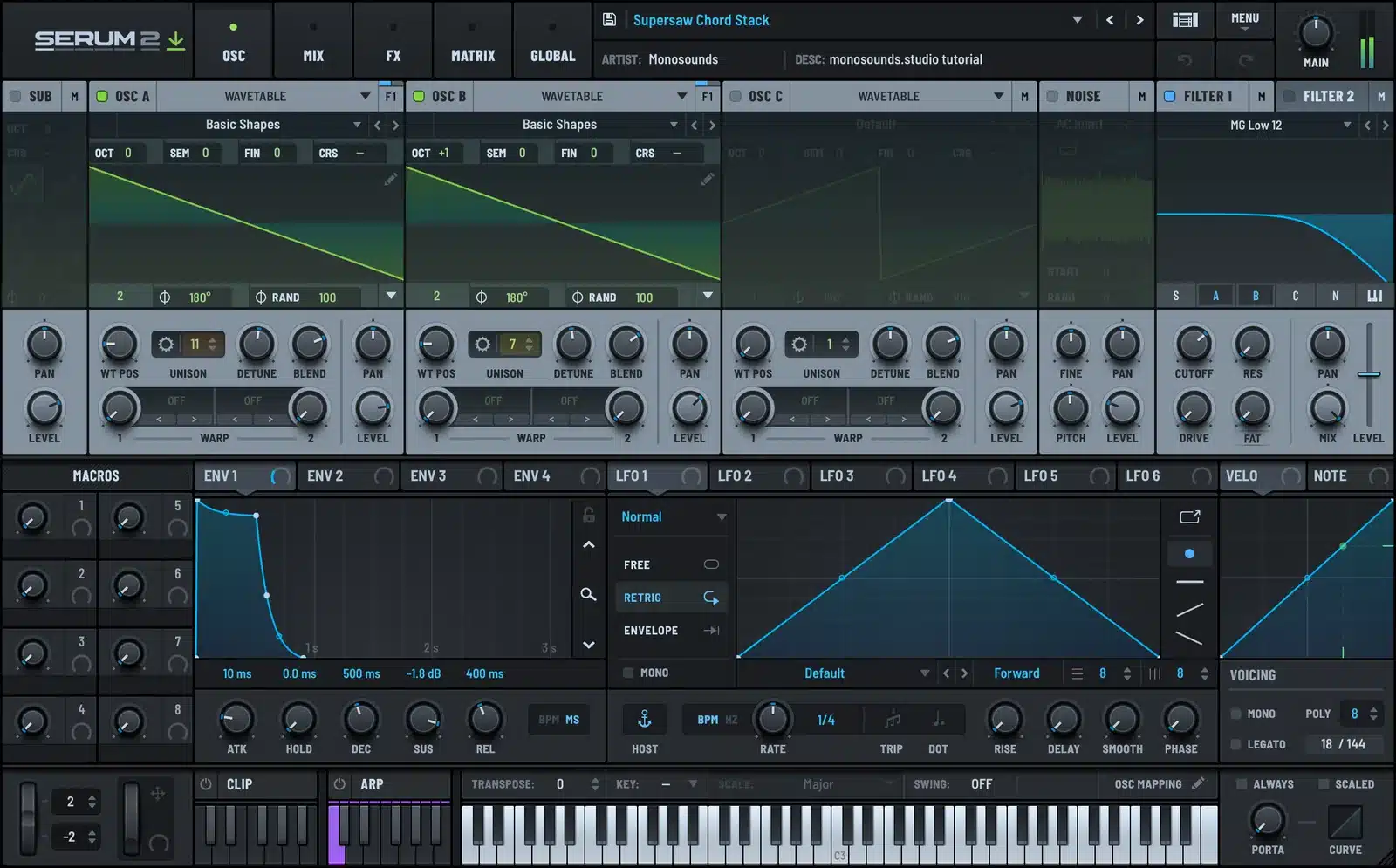
- Oscillator A gets a saw wavetable with unison at 6–7 voices. Set detune somewhere in the 0.15–0.25 range: you want shimmer, but the pitch center has to stay obvious.
- Duplicate that setup on oscillator B, pitched an octave higher and a bit quieter. That octave layer does half the work of making the sound feel big.
- Give the amp envelope 5–15 ms of attack so each chord blooms rather than clicking in. Keep release short, around 200 ms, so stabs stay clean.
- Here’s the step people miss: high-pass the entire patch at 150–200 Hz. Detuned unison down there is pure mud. The low end should come from a dedicated mono sub carrying the chord roots.
For voicings, stay in minor and stack 9ths onto your triads. Plain A minor reads like a demo track; A minor add9 reads like the genre. Spread the chord across two octaves with the melody note sitting on top.
This clip shows the wide, emotional side of the technique. It’s from our future bass pack — same chord approach, different rhythmic tradition.
Growl-lite: aggression with a melody
Basses in melodic dubstep speak; they don’t shriek. The foundation is mild FM: oscillator A stays as your body while a second oscillator frequency-modulates it, and you sweep the FM amount with a macro or LFO. Keep the amount small and you get vowel-like motion. Crank it and you’re back in straight dubstep growl territory.
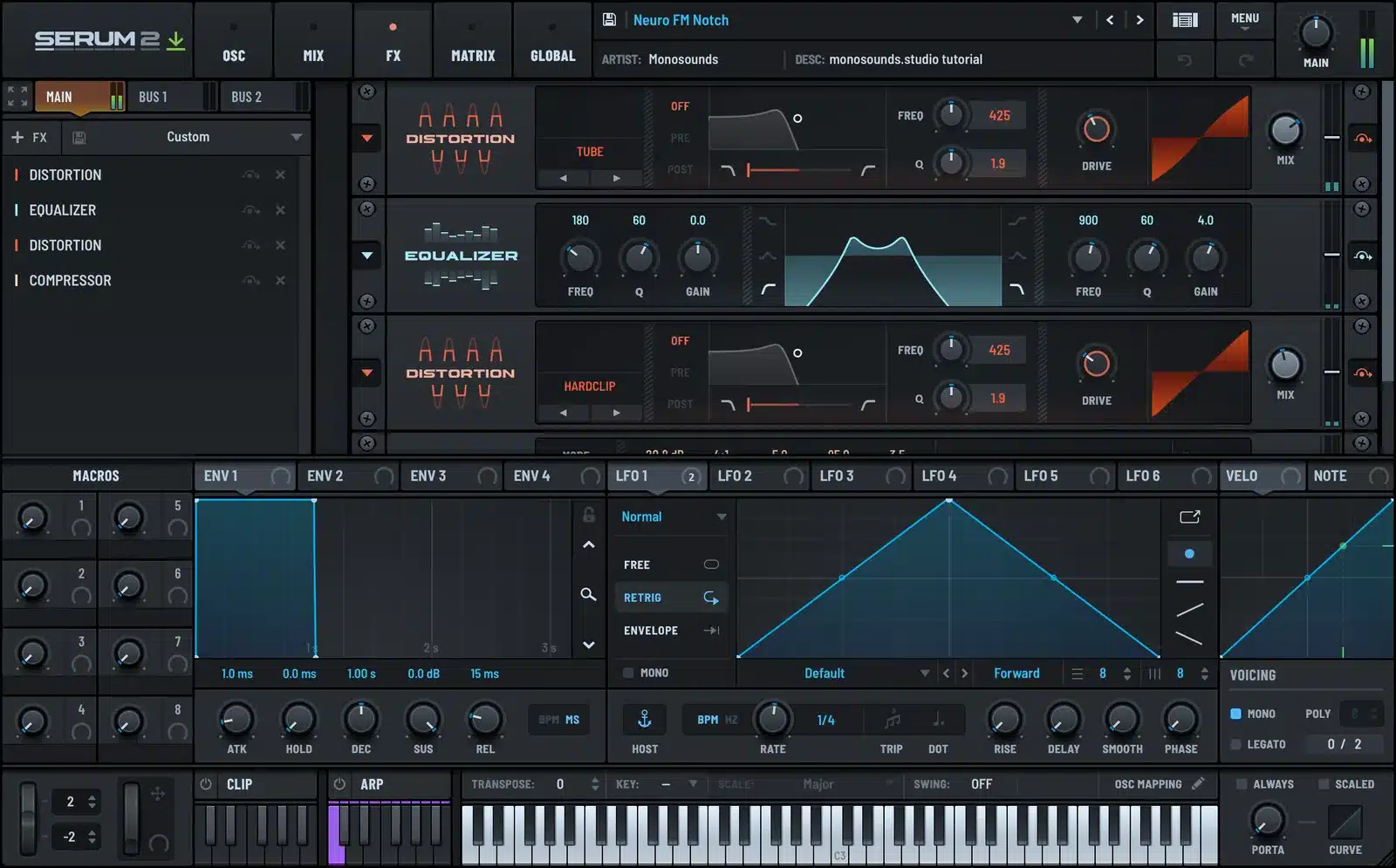
Two choices that stop growls from turning harsh:
- Roll off the top with a low-pass around 8–10 kHz. Everything above that is the fizz that wears ears out when it sits next to pretty chords.
- Give the bass real melody notes in the drop so it trades phrases with the chords. Dubstep treats the bass as percussion. This genre treats it as a vocalist.
Want the nastier version of the same technique? I covered full dubstep growls in their own article, and every trick there works here, just at lower intensity. There you run it at eleven, here at six.
Here’s a demo from our Skrillex-inspired pack. Listen to how the bass still traces an actual musical phrase.
The quiet-loud arrangement
The tempo lives around 140–150 BPM, yet the drop reads as half-time because the snare lands on beat 3 rather than on 2 and 4. That halved pulse is what lets drops feel massive without feeling fast.
What I check in the 8 bars leading into a drop:
- Remove layers instead of piling them on. The final bar before a drop is often close to silence, maybe a vocal or a riser and nothing else.
- Kill the reverb tail dead on the drop’s downbeat. A pocket of emptiness right before the hit is what makes the hit land.
- Make the first chord of the drop the fattest voicing in the entire song, and hold your highest melody note back for that moment.
Then sidechain the whole drop — chords, growls, atmosphere, all of it — to the kick and snare. The pumping in melodic dubstep is no mixing accident; that breathing motion belongs to the genre’s sound.
Sub discipline
Below the growls and chords sits a boring sine sub: mono, dry, tracking the root notes. No detune, no reverb, no stereo width. When the growl takes a fancy pitch dive, the sub ignores it and keeps holding the root. We build our own packs on that rule: flashy top, dull bottom, and the drop translates to any speaker.
Starting from nothing? Grab our free Serum 2 presets and pull apart the pad and bass patches. Resaving a working patch with your own edits teaches you more per hour than starting from init ever will.
And once you’re sure this genre is home, the Serum 2 preset bundles are the smart purchase. Melodic dubstep steals from future bass and dubstep packs constantly, and a bundle gets you all of them for less than separate buys.
FAQ
What BPM is melodic dubstep?
Typically 140–150 with the drop in half-time, so it grooves like 70–75. The tell is a snare landing on beat 3.
How is it different from future bass?
They’re close relatives, truthfully. Future bass runs straighter time with pitch-bent chord stabs; melodic dubstep holds onto the half-time drop and rougher basses. The chord comparison lives in my future bass tutorial.
Why do my supersaw chords sound thin in the drop?
Nine times out of ten: the saws aren’t high-passed and there’s no dedicated sub layer underneath. Width is the saws’ job, weight is the mono sub’s job, and those are two separate jobs. If you’d rather skip the wiring, the supersaw patches in our Serum 2 presets sorted by genre already have that split built in.
How many voices of unison do I need?
6–7 per oscillator does the job. Anything past that spends CPU on width no full mix will ever reveal.
Start with the chord patch, add the sub, then design one growl that can carry a melody. Those three sounds plus a ruthless quiet-loud arrangement and the whole genre is yours.
I run Monosounds.studio and make the packs myself. Ten-plus years of producing, 97+ releases, 16,000+ downloads. Every Serum 2 preset we ship passes a CPU check on a mid-range laptop and gets used in a real track before release. If it does not survive a mix, it does not go in the pack.
More about Maxim & the studio →

