There’s really one rule in hyperpop production: grab ordinary pop ingredients and shove each one about 30% past where it should go. Too bright, too loud, too fast. The distortion isn’t an accident — it IS the genre’s personality.
Full disclosure: hyperpop isn’t what I listen to for pleasure. The sound design, though, is legitimately fun to build, and about half of these moves carry straight over into future bass and modern pop. That’s the reason I keep returning to it.
Supersaws, but pitched up
Begin with a normal supersaw (thick unison, wide detune) and then play the whole part an octave above where your instinct puts it. Stack a duplicate one more octave up. What you get is thin, glassy and mildly painful. That means you did it right.
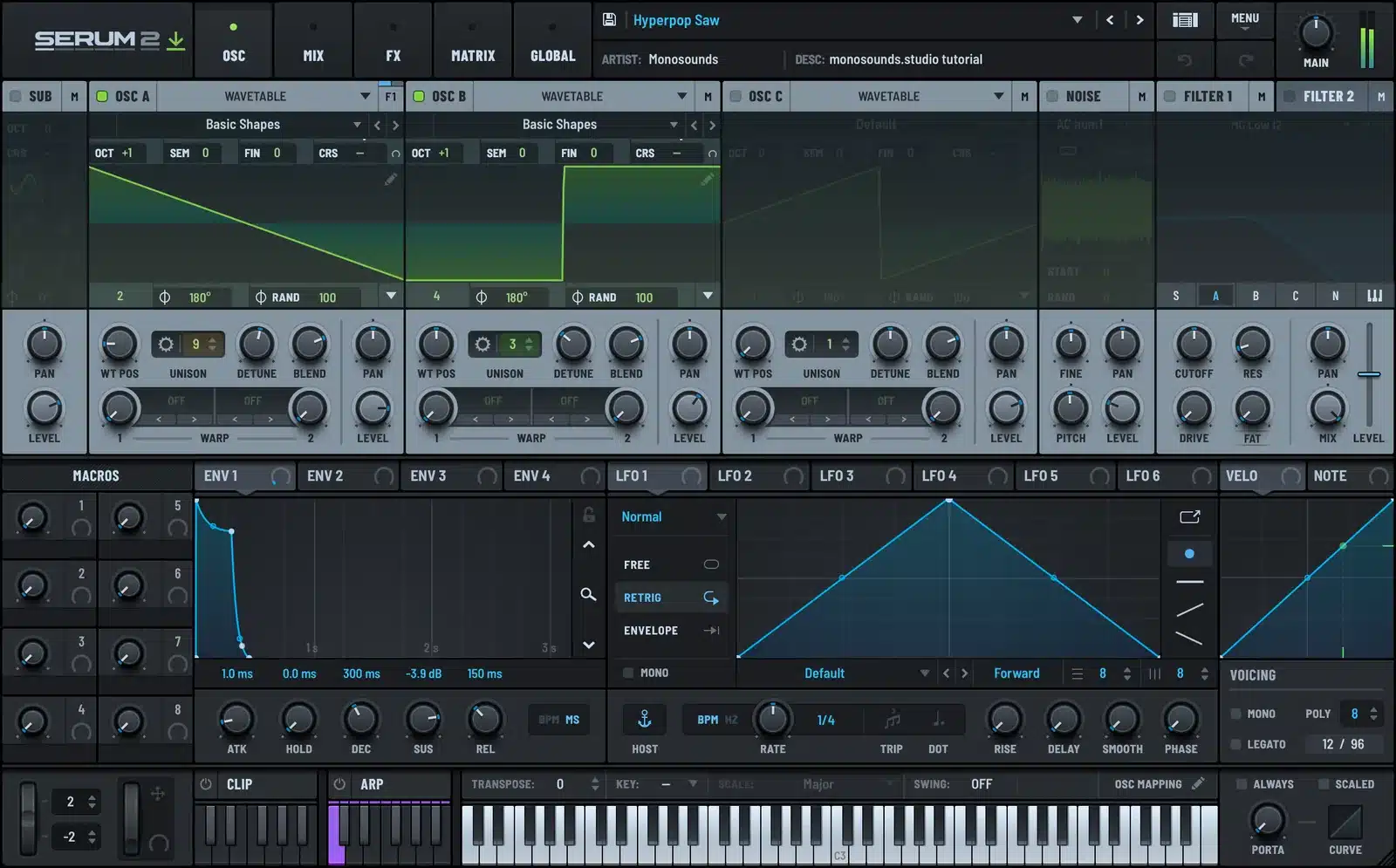
Resist the urge to fix the thinness with low end. Highpass those saws somewhere around 200–300 Hz and accept them as a top layer; all the weight lives in the 808 or the sub below, never in the chords themselves. If you want the complete unison breakdown, it’s in the supersaw article; hyperpop is that same recipe deliberately run at the wrong altitude.
Hard clip everything — in the right order
The loudness in hyperpop comes from clipping, not compression. A hard clipper flattens the peaks, and when you really lean on it, it produces the crunchy buzz the whole genre lives on.
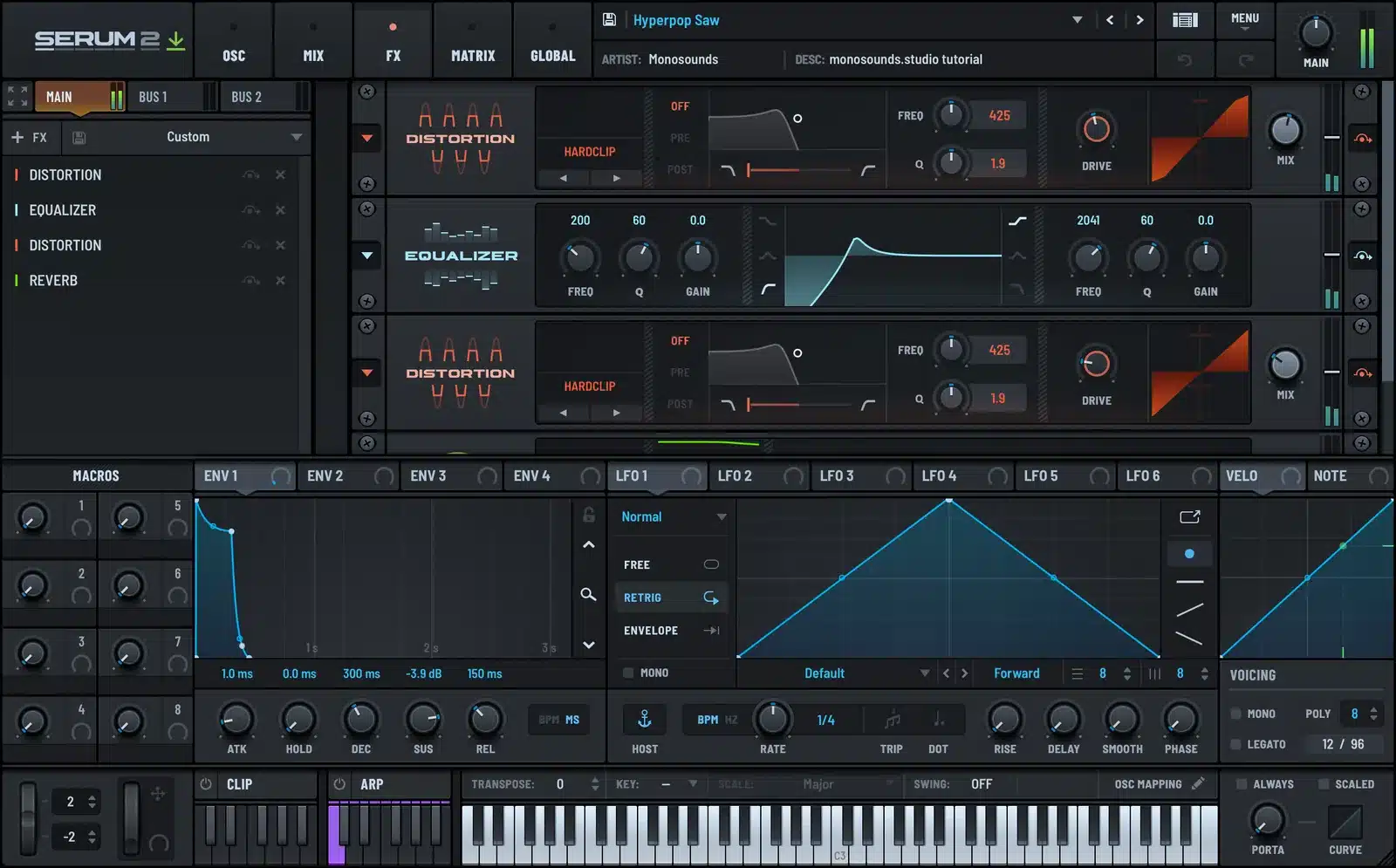
Two sequencing details that genuinely change the result:
- Clip after the widening. Chorus or unison-widen first, then the clipper. Do it backwards, clip then widen, and the crunch dissolves into shapeless fizz.
- Clip each layer separately instead of throwing a single clipper across the bus. Clipping per sound keeps everything articulate even at ridiculous levels; clipping the bus just collapses the whole thing into static.
Drums get identical treatment: push a clipper on the drum bus until the kick’s tail disappears. Anywhere else, that’s destroying your mix. In hyperpop, that IS the mix.
Pitch bends are the hook
Melodically, hyperpop’s fingerprint is pitch that will not hold still:
- Dial glide time to around 100–300 ms on your leads and write huge interval leaps, octaves rather than steps. The smear between the notes is where the expression lives.
- Put pitch bend range at 12 semitones and drop full-octave dives at the ends of phrases.
- Automate the glide time itself: snappy in verses, then long and drunk through transitions.
All of these bends are impressions of a hyper-tuned singer scooping up into notes. The moment you start hearing your leads as fake vocals, writing them gets dramatically easier.
Glitchy vocal-ish plucks
Those chirpy, half-speech plucks are two tricks stacked on each other:
- A pitch envelope hitting the attack: begin +12 semitones and drop to zero over roughly 50 ms. The ear reads that chirp as a vocal onset.
- A formant-style filter move: a quick envelope sweeping the filter so every note does a small “yah”. Serum 2’s filter types handle this fine; just keep the sweep below 100 ms.
Or don’t synthesize at all: drop a real vocal phrase into the granular oscillator, squeeze it down to pluck length, and play it chromatically. Always pitch upward, never down — up reads as hyperpop, down reads as trap.
For the family resemblance, listen to this future bass demo, identical DNA at a slower tempo and wider stance:
The overlap is genuine: learn one genre and you’re most of the way to the other. The slower cousin gets its own breakdown in the future bass tutorial.
Arrangement: no transitions, just cuts
A hyperpop arrangement is brief and blunt. Forget risers; mute the entire track for a single beat, then crash into the next section. Sections stay at 8 bars, and anything running past 2:30 needs something cut. Density and surprise generate the energy here, not build-ups.
Need raw material to abuse? The free Serum 2 presets hand you clean saws and plucks to shove through clippers, genuinely a better start than an init patch, since this genre rewards abuse over purity. Once you’re committed enough to want a whole library to destroy, the Serum 2 preset bundles are the cheapest per-patch route.
FAQ
Isn’t hyperpop just distorted pop?
In terms of structure, sort of: the songwriting is pop. What defines it is the excess: tuning, clipping and tempo all deliberately pushed past good taste.
What BPM?
Anything from 130 up to 180. Density and pitch movement create the energy rather than raw tempo; plenty of the most frantic tracks actually sit in half-time feels.
How much clipping is too much?
The moment you can’t identify which note the bass is on, pull back. You’re chasing crunch; pitchless static means you overshot.
Can Serum 2 do the vocal sound?
The instrumental plucks and chirps, absolutely. The actual hyper-tuned vocal needs a human voice run through heavy pitch correction; no synth fakes it convincingly. For everything instrumental, the future bass and pop packs in our Serum 2 preset catalog will get you further than an init patch will.
Make it loud, keep it short, and leave the ugly bits in. If a patch makes you flinch a little and grin at the same time, the genre is doing exactly what it’s supposed to.
I run Monosounds.studio and make the packs myself. Ten-plus years of producing, 97+ releases, 16,000+ downloads. Every Serum 2 preset we ship passes a CPU check on a mid-range laptop and gets used in a real track before release. If it does not survive a mix, it does not go in the pack.
More about Maxim & the studio →

