Back to the storeStore DUOVOX
DUOVOX The Polivoks, reconstructed · 257 presets $59 Buy

In 1982 a Soviet engineer built a filter out of two chips that were never meant to be one. Press the key.

DUOVOX — Polivoks (Polyvox) synthesizer plug-in, VST3 and AU

A reconstruction of the Polivoks duophonic synthesizer
The story ↓
I1982

A synthesizer for every genre. And for the wind.
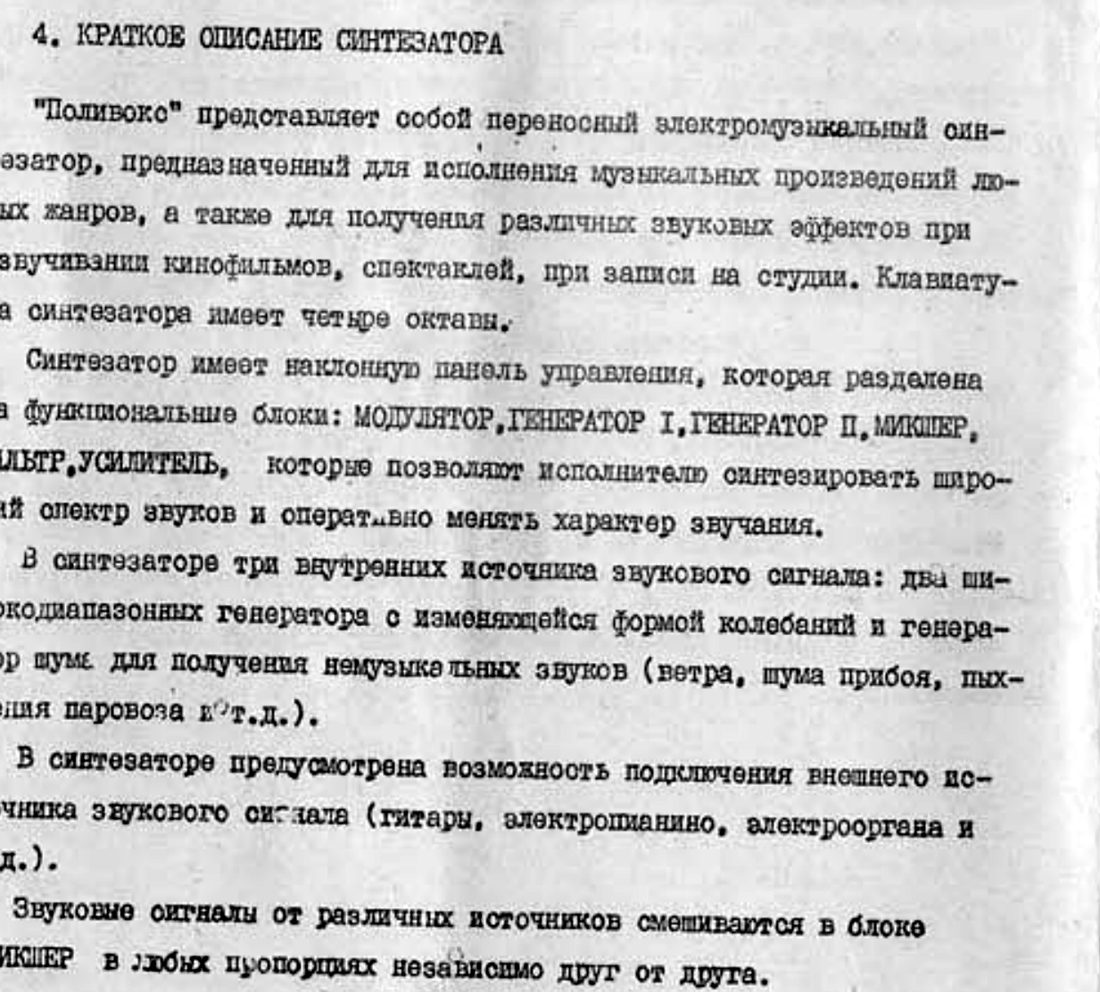
Owner's manual, section 4: brief description
Owner's manual, section 4: “a portable electromusical synthesizer, intended for music of all genres, and for sound effects in films and plays and in studio recording.”

The Polivoks was designed by Vladimir Kuzmin, an engineer who, by his own account, was 24 in 1980. Its owner's manual describes it in one sober sentence: a portable electromusical synthesizer for music of every genre, and for sound effects in films, stage plays and studio recordings.

It was built the way a Soviet plant built serious equipment. Every block, two generators, a mixer, a filter, an amplifier, a modulator, sits on its own circuit board and plugs into a backplane. On the front, each block got its own raised black plastic plate, silk-screened in white and set into a silver aluminium frame. The knobs were designed for this instrument and cast at the plant. The lid comes off and becomes the transport case. The ribbed side cheeks, its designer said, looked like tank tracks.

There was no memory, no presets, no MIDI, no control-voltage jacks. Two controls Kuzmin wanted, a pitch bender and a modulation wheel, never made it in. What did make it in was the filter.
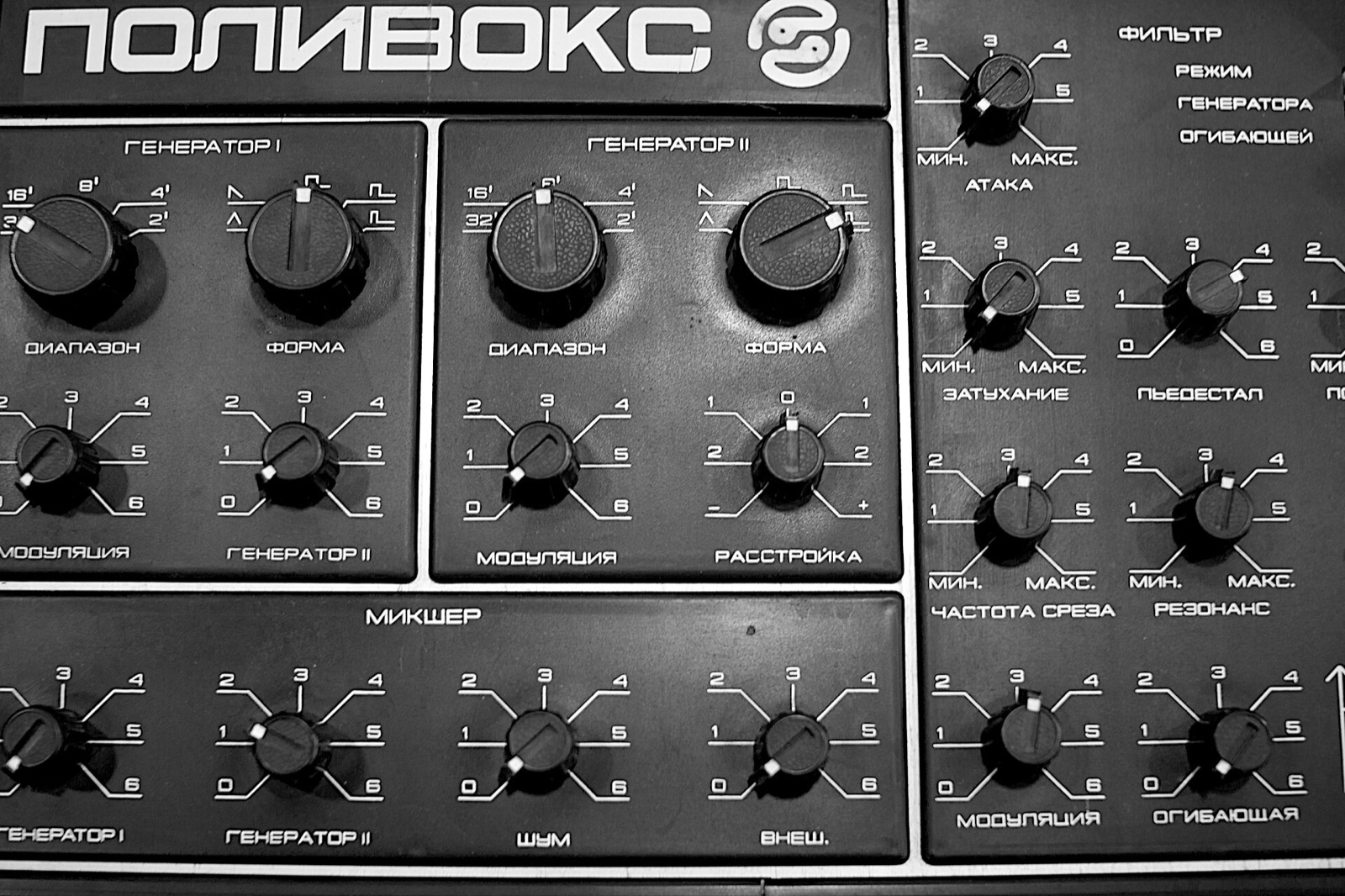
Close-up of an original Polivoks panel
An original Polivoks panel: the two generators, the mixer and the filter. Photo: Rob Sinclair, CC BY-SA 2.0, via Wikimedia Commons.

One batch in 1982 got phosphorescent paint by mistake. On those units the knob pointers glow green in the dark.
IIthe integrator filter

The circuit that should not have worked.

A filter needs capacitors. Kuzmin noticed that one Soviet op-amp, the К140УД12, run without any feedback, already behaves like an integrator, and that its speed follows the current you feed it. Two of them, open-loop, became the heart of the filter. With this chip, he wrote, you do not even need the capacitors.

It came with a flaw. At low control currents a small step appears in the chip's output stage, and the filter turns hard and gritty in the low end. The designer himself put the instrument's aggressive, fat sound down to exactly that.

Turn the resonance up and it gets stranger. The self-oscillation is unstable and depends on how hard you drive it: too quiet and it turns simple, too loud and it vanishes. In between, it screams. Press the key.

24–35 dBhow far the resonant peak stands above the notes it filters, measured on the original
−15 dBthe third harmonic of its self-oscillation (−15 to −22 dB on the originals): a sine with the tops flattened
68 %of a filter sweep, the resonance parks on a harmonic of the note

Now switch both generators off. On most synthesizers that is silence. Here the filter keeps singing on its own and follows the keys.

A filter built out of a chip's flaw. That flaw is the sound people have chased for forty years.

IIIfrom effects to the underground

From steam trains to the underground.

The factory was thinking of effects. The manual offers the noise generator for “non-musical sounds”: wind, the surf, the puffing of a steam engine. The passport adds rain and gunfire. Two envelopes that can loop by themselves turn one held key into a machine that keeps moving.

Musicians heard something else. By the late 1980s it was in Soviet rock, synth-pop and the punk underground, where a synthesizer that sounded angry was exactly what was missing.

Then the instruments travelled west, and the name started turning up in studio gear lists: indie and post-punk records, electro-pop, industrial metal and metalcore, and later the scores of big shooter and science-fiction video games. The same filter, every time it was asked to sound dangerous.

Where it has been heard

Each line links to where it is reported. Wikipedia entries cite their sources; Equipboard lists gear players are known to own or use.

One Western reviewer needed a single word for it. He chose “psychotic”.

Even its lettering became folklore. Owners abroad read the voice switch, 1-ГОЛ. / 2-ГОЛ., as “1-Ron / 2-Ron”. It means one voice, two voices.

IVwhy the originals are disappearing

Every year, fewer of them make a sound.

No one builds them any more, and the ones left are forty years old. They were never easy. The manual lists the set at up to 20 kilograms, in a case 780 by 490 millimetres. The ribbed plastic cheeks are brittle and often cracked. The reed-switch keys clatter and yellow; one reviewer called it the worst keyboard he had ever played.

Then there is tuning. The oscillators' exponential converter is a transistor array kept heated by its own thermostat, so the pitch can hold. Six tuning trimmers hide under the name plate. The designer recalled that units often left the plant without being properly calibrated, and owners still talk about drift, hiss and a quiet output.

Opening one up is a ritual: lift the name plate, find the trimmers, listen. Every surviving Polivoks sounds a little different, and every one of them is getting older.

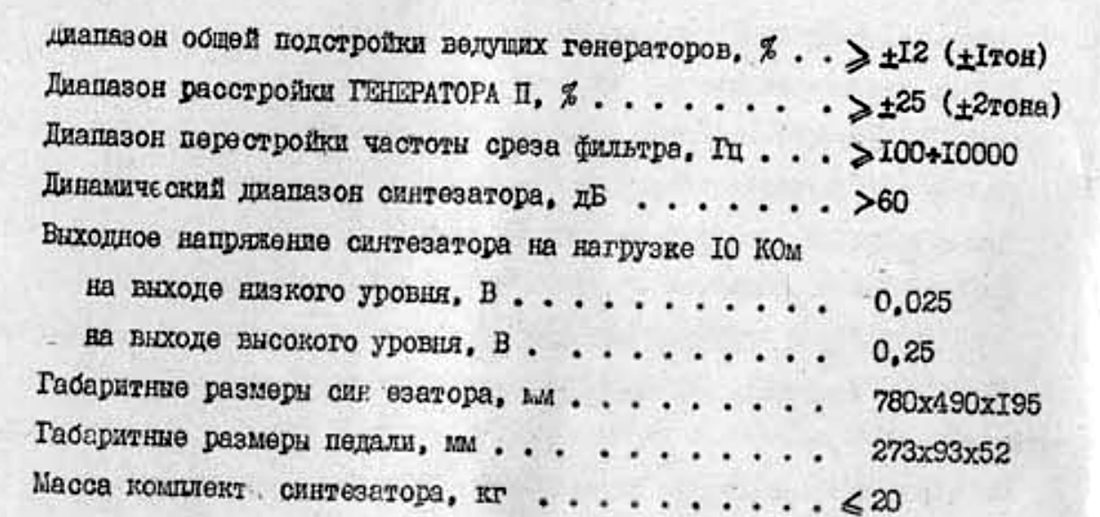
Owner's manual: main specifications
Owner's manual, main specifications: tuning range, filter range 100–10 000 Hz, dimensions 780×490×195 mm, mass of the set ≤ 20 kg.
≤ 20 kgthe set, by the manual
780×490millimetres of case, 195 deep
6tuning trimmers under the name plate
0memories, MIDI ports, presets

There are no new ones. You can only find an old one, and keep it alive.

Vmeasured against three units

So we measured three of them.

Duovox is not a sample library and not a generic synth with a filter bolted on. It is the Polivoks's circuit rebuilt in code, block by block from the factory schematics, then tuned against three original units: two recordings of working instruments and a multisampled third.

Every oscillator cycle was cut out, aligned and averaged, then laid over the plugin's. White is the original, red is Duovox, the number is how far apart the shapes are.

Polivoks, recordingDuovox% = cycle-shape difference

Across the three units the pulse widths came out at 45, 20 and 8.8 %. The filter follows the keys at 62 %. The pitch wanders by about a cent on a long note. Those are the numbers Duovox runs on.

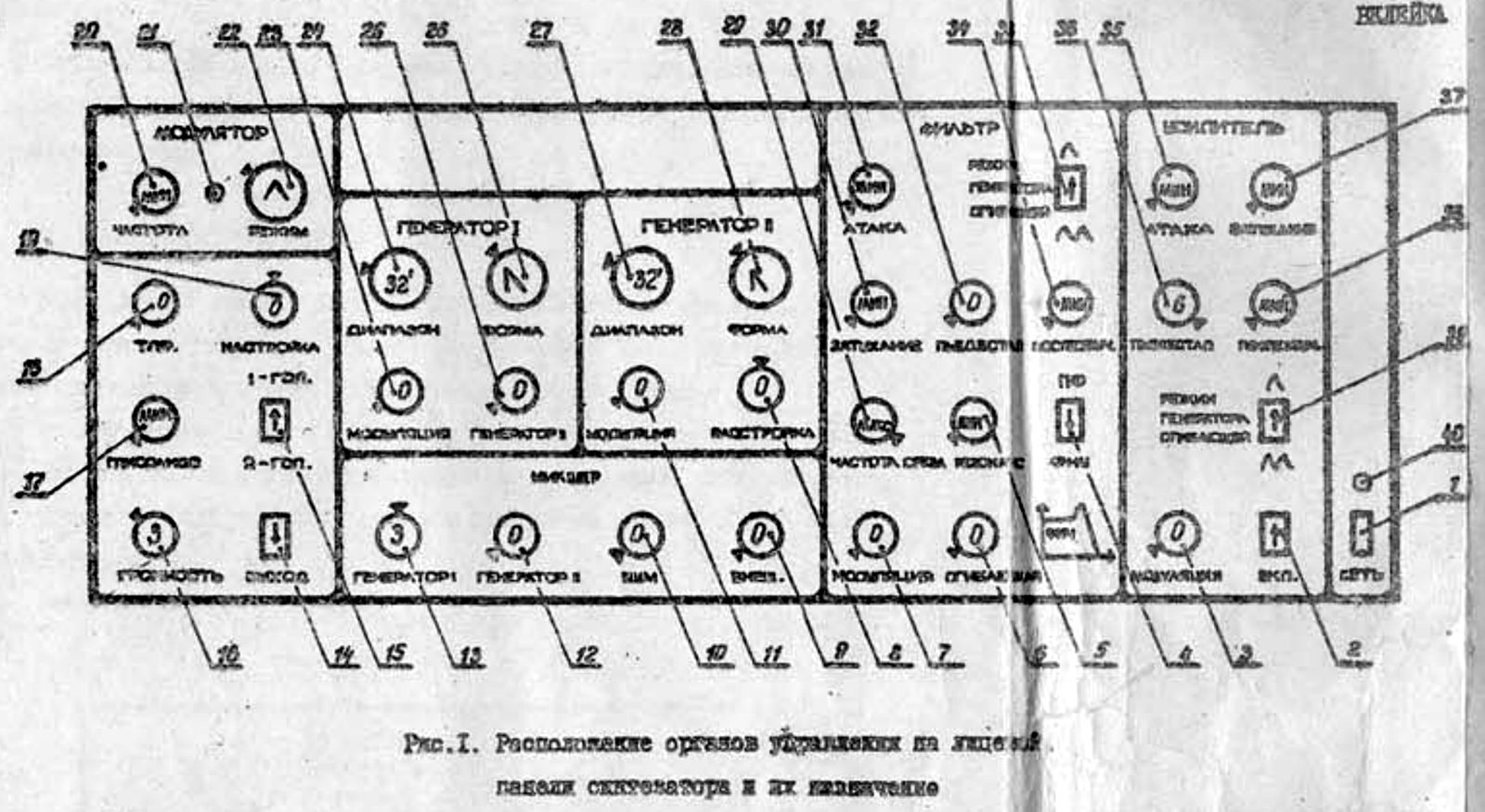
The factory never printed a patch chart. The only knob positions it ever published are in Fig. 1 of the owner's manual. Load CLASSIC / Manual Fig. 1 and Duovox stands exactly as the drawing does, knob for knob. This is what that drawing sounds like.

Fig. 1, owner's manual
Fig. 1 — the Polivoks owner's manual
Duovox set to Manual Fig. 1
Duovox · CLASSIC / Manual Fig. 1
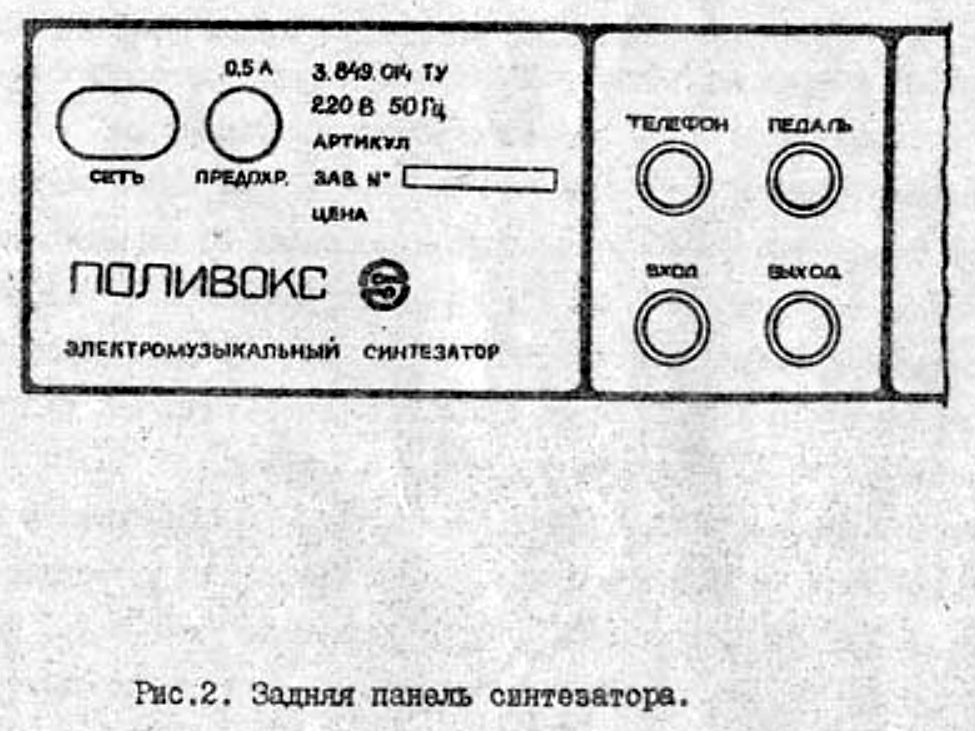
Fig. 2, owner's manual: rear panel
Fig. 2 — the original's rear panel: power, fuse, phones, pedal, input, output

The front is 1982, untouched. Everything a 1982 owner never had lives on a rear panel: up to 8 voices, velocity to filter and amp, pitch bend, mod-wheel vibrato, analog drift, stereo spread, filter drive, key tracking, legato. Undo and A/B, too.

Duovox · rear panel
▶one minute, no talking

Now watch it play.

A minute of the plugin itself: the scream, the two voices, a loop that plays itself, the filter with nothing in the mixer, GEN. Every knob you see turning is the sound you hear.

♪five stems, all Duovox

One synth, one song.

Every sound in this track, drums included, is Duovox: sixteen factory presets, four of them lightly tweaked. Mute anything, solo anything.

Demo track · “Last Tram Home”
B minor · 132 BPM · Bm–G–D–A, a darker Em–C–G–F# in the break · 5 stems
0:00 / 1:24
Click a lane to jump there. Mute and solo work while it plays.
Opened as a local file, the page plays the full mix only. Served over http, every stem is live.
Is Duovox a Polivoks VST?

Yes. Duovox is a software reconstruction of the 1982 Polivoks synthesizer, also written Polyvox, Polyvoks or Поливокс: the full panel, duophony, the two-chip filter and the looping envelopes, as a VST3 and AU instrument for Mac and a VST3 for Windows. It is made by Monosounds and is not affiliated with the makers of the original instrument.

Is there a Windows version?

Yes: VST3 for Windows 10 and 11 (64-bit). One licence covers both systems. Try the free demo first. Windows may show a SmartScreen warning when you run the installer: Duovox is our first product, so Windows has no install history for us yet. Click More info, then Run anyway.

Which DAWs does it work in?

Any host that loads VST3 or AU plug-ins: Logic Pro, Ableton Live, Bitwig, Reaper, Studio One, Cubase, FL Studio and others. On the Mac it needs macOS 11 or newer and runs natively on Apple silicon and on Intel.

Is this the original circuit?

It is a reconstruction: the Polivoks's circuit rebuilt in code, block by block from the factory schematics, then measured and tuned against three original units. No recordings of the original are played back.

What do I get?

The plug-in as VST3 and AU, 257 presets (the core bank of 106 plus five packs: Metal, Dance, Coldwave, Experimental, Inferno) and GEN, which builds new sounds on the circuit. One payment.

Are updates included?

Yes. Updates are free for everyone who bought Duovox.

VIno case, no trimmers, no warm-up

Now it's yours.

Twenty kilograms became a window on your screen. The filter screams the way it did in 1982, and nothing on it needs a screwdriver.

When you want something new, press GEN. It knows what makes a bass, a lead, a scream or a cold post-punk pad on this circuit, builds one, and levels it like the factory bank. Six clicks:

$59
$29

Intro price until Sun, Oct 25 · then $59

Duovox · macOS 11+ VST3 / AU · Windows 10 / 11 VST3 · 257 presets · free updates
Download the demo · macOS
Free demo for macOS · Windows
Everything plays. Until you buy: a burst of noise every 45 seconds, no preset saving, no offline render. After buying, install the full version over it and click ACTIVATE.

1

2

3

4

5

6

7

8

★

GEN · COLDWAVE ▾

Duovox is made by monosounds.studio x guk.ai and sold at monosounds.studio. It is an independent reconstruction and is not affiliated with, endorsed by or connected to the makers of the original instrument or the owners of the Polivoks / Поливокс name; the name is used only to say which instrument was reconstructed. Manual excerpts are reproduced from the 1980s owner's manual for reference. Audio clips are unprocessed renders of the plugin's factory presets.

Panel photo: “Polivoks (closeup)” by Rob Sinclair, via Wikimedia Commons, licensed CC BY-SA 2.0 (creativecommons.org/licenses/by-sa/2.0), resized.